.png)

7 Top Business Entry Security Upgrades
- Durham Regional Locksmiths

- 2 days ago
- 6 min read
A front door can look solid and still be the weakest point in a business. Many break-ins happen at entry points that seem fine during the day but fail after hours - a worn closer, a basic cylinder, bad key control, or glass that gives easy reach to the inside hardware. When business owners ask about the top business entry security upgrades, the right answer usually starts with the door itself, then works outward.
That matters whether you run a retail shop, manage a small office, oversee a medical suite, or maintain a multi-tenant commercial property. Entry security is not one product. It is a group of hardware and access decisions that need to match how people actually use the building every day.
What makes an entry point vulnerable
The most common issue is not a dramatic failure. It is a collection of smaller weaknesses. A good lock installed on a hollow or damaged door will only do so much. A steel door with a weak frame, short strike screws, or poor latch alignment can still be forced. Even a business with decent locks may have uncontrolled key copies floating around from past employees, vendors, or old tenants.
The other problem is mismatch. Some businesses install residential-grade hardware on commercial doors because it is cheaper upfront. Others add electronic locks without addressing door condition, fire code requirements, or traffic flow. Security upgrades work best when they are chosen as part of the whole entry system, not as isolated fixes.
Top business entry security upgrades that make the biggest difference
If you are deciding where to spend first, start with the upgrades that improve resistance, accountability, and day-to-day control.
1. High-security commercial lock cylinders
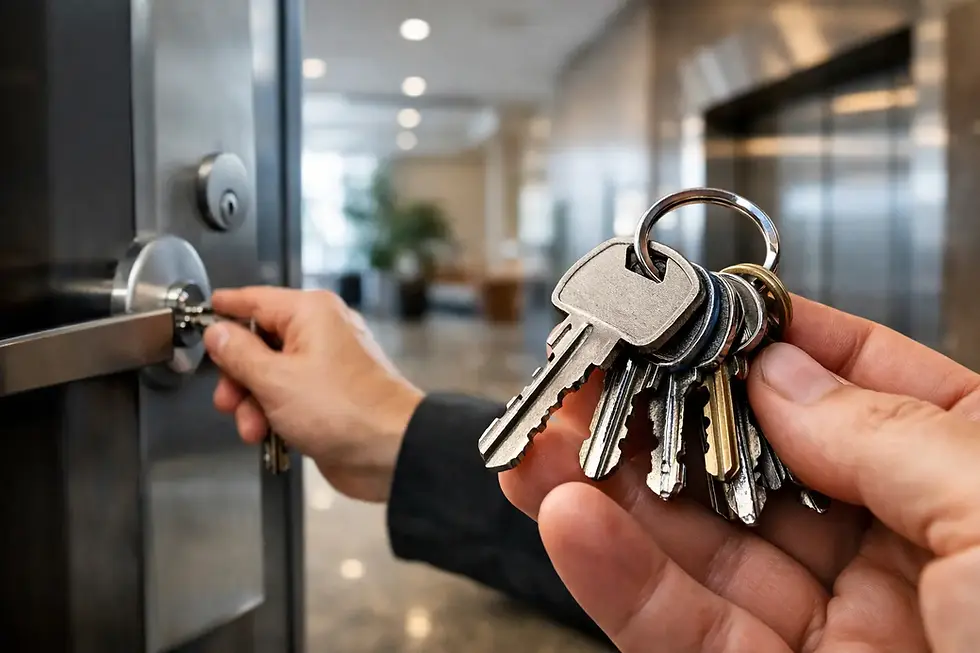
This is one of the strongest first upgrades for a business that still relies on standard keys. High-security cylinders are built to resist picking, drilling, and unauthorized key duplication. That last point matters more than many owners realize. If anyone can copy a key at a hardware store, your lock is only as secure as your least careful key holder.
Restricted key systems give you much tighter control. Copies can only be made through authorized channels, which helps reduce the risk that former staff, contractors, or temporary workers still have working access. For many offices and storefronts, this upgrade offers a major improvement without forcing a complete change in how the team enters the building.
2. Reinforced strike plates, hinges, and frame hardware
A lock can be high quality and still fail if the surrounding hardware is weak. Reinforcing the strike area, using proper commercial fasteners, and correcting hinge or frame issues can dramatically improve forced-entry resistance. This is not the most visible upgrade, but it is often one of the most cost-effective.
It also solves a practical problem. Misaligned doors wear out locks faster, make keys harder to turn, and prevent deadlatches from working correctly. Reinforcement is about both security and proper function.
3. Commercial door closers and latch control
A business entry is not secure if it does not reliably close and latch every time. Worn or improperly adjusted closers are a common issue on retail and office doors. Staff may not notice during busy hours, but after-hours the door may sit slightly open, fail to latch, or bounce on closing.
Upgrading or adjusting the closer, checking latch engagement, and confirming the door seals correctly can fix a problem that creates an easy opportunity for theft. This is especially relevant for customer-facing businesses where entry doors see constant use all day.
4. Access control for managed entry
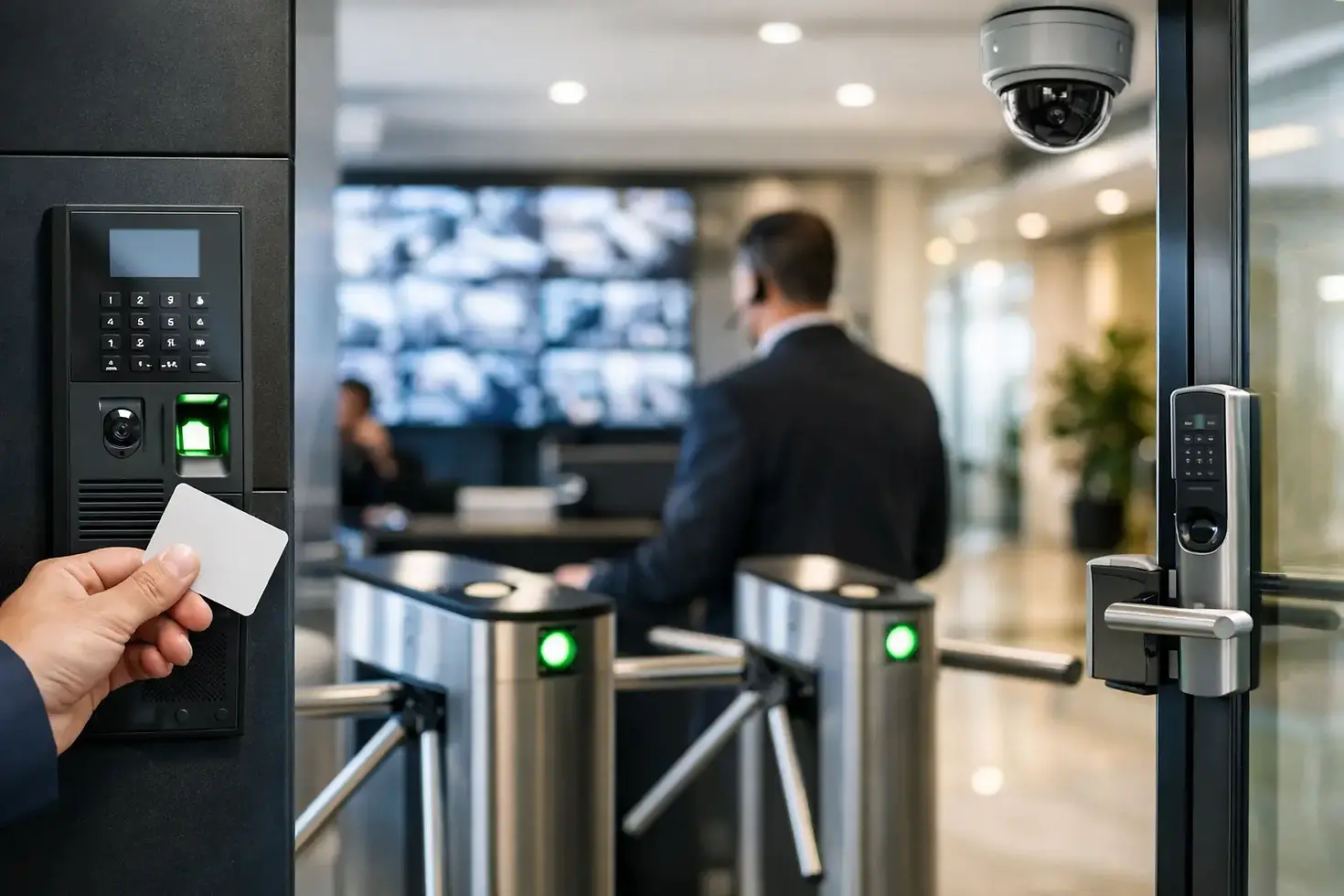
For businesses with multiple employees, frequent turnover, sensitive areas, or after-hours access needs, access control is often the smartest long-term investment. Instead of depending entirely on physical keys, you can issue credentials, set schedules, track entry events, and remove access without changing hardware every time staffing changes.
This is where the best upgrade depends on the site. A small office may only need one controlled main door. A larger property may need separate permissions for staff entrances, stock rooms, server rooms, or tenant areas. Access control adds convenience, but the bigger gain is accountability. You know who had access and when.
5. Master key systems designed for business use
Not every property needs full electronic access control. In many commercial settings, a properly planned master key system is the more practical answer. It allows owners, managers, maintenance teams, and selected staff to have different levels of access without carrying large rings of keys or overexposing every lock in the building.
The value here is control and organization. Done properly, a master key system supports daily operations while limiting unnecessary access. Done poorly, it creates confusion and security gaps. Design matters, especially in multi-unit or multi-department buildings.
6. Panic hardware and code-compliant exit devices
For some business entries, especially in higher-occupancy spaces, security cannot come at the expense of safe egress. Panic hardware and exit devices allow quick exit from inside while still protecting the opening from the outside. In some buildings, this is not optional - it is part of staying code compliant.
This is one reason entry security should not be approached as a simple lock swap. The right hardware has to match life safety requirements, occupancy use, and traffic patterns. A secure door that creates exit problems is not a successful upgrade.
7. Door glazing protection and latch-side security improvements
If your entry door includes glass near the lock, the hardware may be reachable after the glass is broken. In some cases, that risk can be reduced with security film, glazing changes, or hardware choices that limit easy reach-through access. Latch guards and related protections can also help where the gap between door and frame is vulnerable to attack.
These are not universal upgrades for every site, but they are worth considering for storefronts and other entries with exposed glass.
How to choose the right upgrade path
The best approach depends on what kind of business you run and how your entry point is used. A retail storefront may prioritize stronger closing and better after-hours resistance. A medical or professional office may care more about controlled staff access and key restriction. An industrial or warehouse site may need layered security at employee entrances and delivery points.
Budget matters, but so does the cost of doing the wrong work first. It is common to see owners spend on a new lock when the actual problem is a weak frame or a door that never latches correctly. In other cases, businesses jump into electronic access control before dealing with traffic flow, power needs, or the condition of older doors.
A good site review looks at the full opening. That includes the door, frame, hinges, closer, strike, lock type, key control, code requirements, and how the space operates during business hours and after closing.
When basic locks are no longer enough
There is usually a tipping point where traditional locks stop being the right fit by themselves. If you have employee turnover, lost keys, vendor access, interior restricted areas, or recurring concerns about copied keys, it may be time to move beyond standard hardware.
That does not always mean going fully electronic. Sometimes a restricted high-security key system and better door reinforcement solve most of the problem. Other times, access control at the main entry combined with mechanical security elsewhere is the smarter mix. The answer depends on risk, staffing, and how much visibility you need over who comes and goes.
Why installation quality matters as much as hardware
Commercial entry hardware is only as good as its installation. Even a premium lock or exit device will underperform if it is mounted on a warped door, paired with the wrong backset, or installed without proper alignment. Small errors lead to big headaches - sticking locks, premature wear, false latching, and avoidable service calls.
That is one reason many business owners prefer working with an experienced commercial locksmith instead of treating entry security like a shelf purchase. The goal is not just to add hardware. It is to make sure the opening works properly under daily use and holds up when it matters most.
For businesses in Oshawa, Whitby, Ajax, Pickering, and across Durham Region, entry security upgrades are usually most effective when they solve both the immediate weakness and the long-term access issue. The strongest result comes from choosing hardware that fits the building, the people using it, and the level of control the business actually needs.
If your front or employee entrance has become something you only think about after a problem, that is usually the sign to address it before the next one. A better door setup does more than resist break-ins. It helps your business open, close, and operate with fewer risks built into the first point of entry.