.png)

How to Program Key Fob Without Guesswork

A fob that will not lock the doors can turn a routine trip into a frustrating problem fast. If you are searching for how to program key fob controls after replacing a battery, buying a spare, or losing a key, the right answer depends on your vehicle, the type of fob, and whether you still have a working key.
Some vehicles allow a limited owner-programming procedure. Others require a diagnostic tool, a pre-coded remote, or a locksmith with the correct automotive programming equipment. Trying random online instructions can waste time, drain the fob battery, and, in some cases, leave the vehicle unable to recognize a valid key. Start by identifying what you have before you attempt a fix.
First, Know What Type of Key Fob You Have
The term key fob covers several different devices, and they are not programmed the same way. A basic remote controls door locks, the trunk, panic alarm, or remote start. It may work separately from the ignition key on older vehicles.
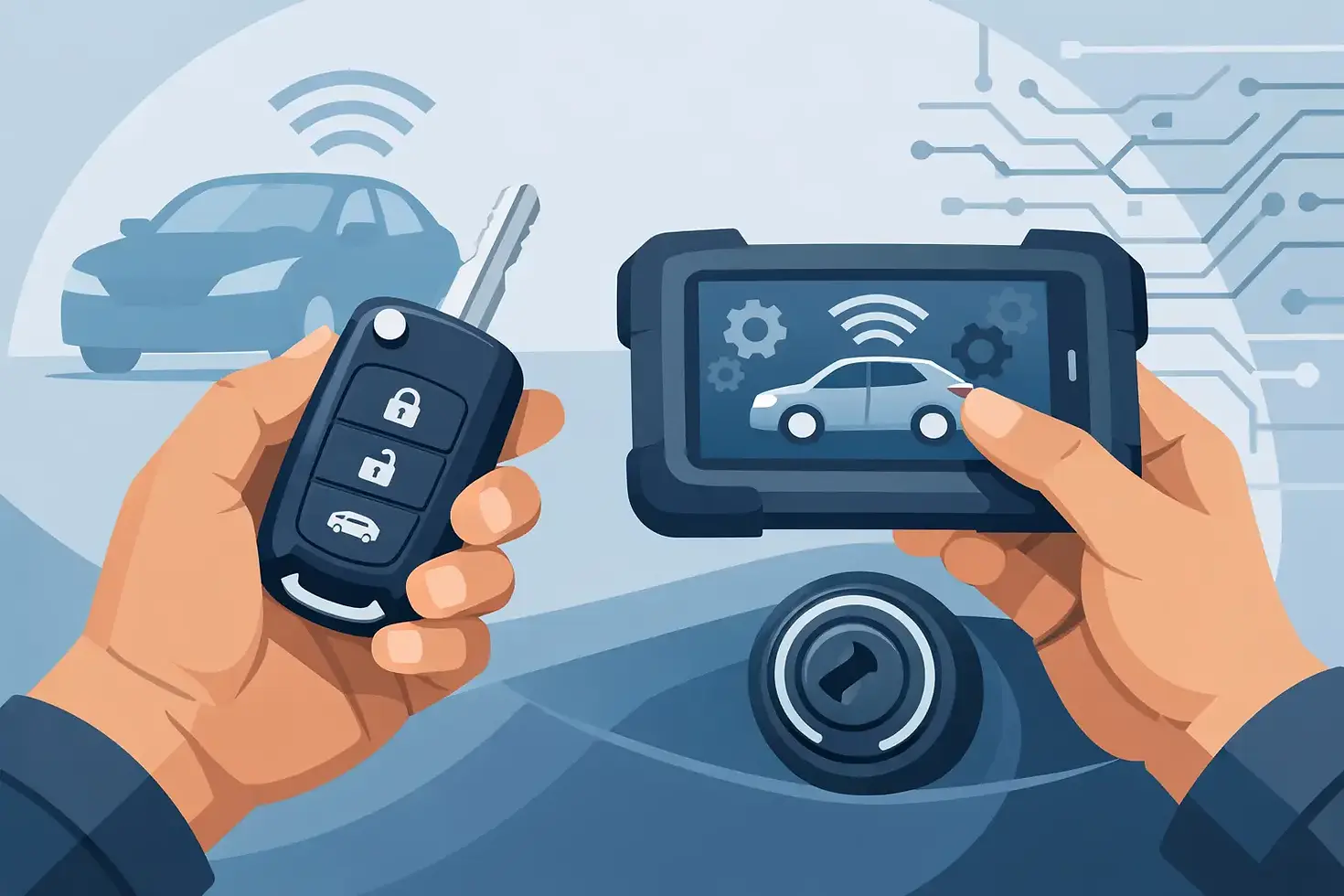
A transponder key has a small electronic chip inside the key head. The chip communicates with the vehicle's immobilizer when you start the engine. A smart key or proximity fob lets you start the vehicle with a button while the fob is inside the cabin. These systems are usually more secure and more complicated to add or replace.
Your first clue is the way the vehicle starts. If you insert a traditional key into the ignition, you may have a remote plus a transponder key. If your vehicle has push-button start, you likely have a smart fob. The owner’s manual, the vehicle identification number, and the original fob part number can help confirm the correct type.
When You Can Program a Key Fob Yourself
A DIY process is most likely to work when you are re-synchronizing an original remote or adding a compatible remote on an older vehicle that supports onboard programming. This usually involves a specific sequence of ignition cycles and button presses completed within a short time.
The exact order varies by make, model, trim level, and model year. A procedure that works for one version of a vehicle may not work for another, even if the vehicles look nearly identical. Use instructions that match your exact vehicle information, not a generic video or a method intended for a different model year.
Before starting, install a fresh battery in the fob. Check that the battery is facing the correct direction and that the metal contacts are clean and firmly in place. A weak battery can make a programmed fob appear faulty, while a loose battery contact may cause intermittent operation.
If you have a working key and the vehicle manual provides an onboard procedure, follow it exactly. Keep all remotes with you during the process. Some vehicles erase existing remotes when a new one is added, meaning every fob may need to be programmed again during the same session. Test the lock, unlock, trunk, panic, and remote-start functions afterward, where equipped.
How to Program Key Fob Replacements Safely
A replacement fob must be compatible before it can be programmed. The outside shape is not enough. Two remotes can look alike while using different frequencies, chips, button layouts, or electronic identifiers.
Check the part number on the back of the original fob, if available. Match the vehicle’s make, model, year, and trim, then confirm whether the remote has a transponder chip or smart-key function. A low-cost fob that is not correctly matched may never program, regardless of how many procedures you try.
Avoid buying a used smart key unless a qualified automotive locksmith has confirmed it can be reused for your specific vehicle. Many late-model smart keys are designed to be programmed only once. A previously paired fob may require specialized preparation or may be permanently locked to the original vehicle.
It is also worth separating programming from cutting. A remote key blade can be cut correctly and still fail to start the vehicle if its transponder chip has not been programmed. Conversely, a programmed smart key may start the vehicle but still need its emergency key blade cut for manual door access.
Why DIY Programming Often Fails
The most common issue is incompatible hardware. A fob may have the wrong part number, frequency, or internal chip. This is especially common with aftermarket replacements that claim broad compatibility.
Another issue is that many vehicles do not offer onboard programming for security reasons. The fob must be added through the vehicle’s diagnostic port using professional software and equipment. For certain makes, programming may require a security code, an authorized access process, or a working key already recognized by the vehicle.
A damaged fob can create the same symptoms as a programming failure. Water exposure, worn buttons, cracked circuit boards, corrosion, and battery-contact damage can all prevent communication. If the remote functions only when held close to the vehicle, or only one button works, the fob itself may need repair or replacement.
Vehicle-side faults are another possibility. A blown fuse, weak vehicle battery, damaged door-lock actuator, antenna issue, or receiver module problem can stop a healthy fob from working. If multiple programmed fobs stop operating at the same time, the vehicle is more likely to be the source of the problem.
When to Call an Automotive Locksmith
Professional help is usually the practical choice when all keys are lost, the vehicle has push-button start, the key includes an immobilizer chip, or DIY instructions have failed. A qualified automotive locksmith can identify the correct fob, cut an emergency blade where needed, and program the key to the vehicle without relying on dealership scheduling.
This is particularly helpful after a lost-key situation. For security, the technician can often erase lost or stolen fobs from the vehicle’s memory while adding new ones. That means an old fob may no longer start the car or operate the locks, depending on the vehicle system.
At Durham Regional Locksmiths, automotive technicians provide on-site key replacement and programming for many vehicles throughout Oshawa, Whitby, Ajax, Pickering, and the Durham Region. Mobile service can save the cost and inconvenience of towing a vehicle to a dealership, especially when there is no working key left.
Bring proof of ownership and identification when requesting new vehicle keys or fob programming. A reputable locksmith will verify that the vehicle belongs to you before creating or programming a key. This protects drivers and helps prevent unauthorized access to vehicles.
Do Not Ignore a Fob That Works Inconsistently
Intermittent fob operation is often treated as a minor annoyance, but it can become a lockout or no-start problem with little warning. Replace the battery first, using the correct battery type. If the issue continues, inspect the fob casing for damage and have the vehicle tested before the only working key fails.
It is also smart to have a spare programmed while you still have one functioning key. The process is often simpler and less expensive when the locksmith can copy information from a working key. If you use a smart fob, keep the emergency mechanical key accessible and learn where the manual door lock and backup start location are on your vehicle.
A key fob is a small piece of equipment, but it is part of your vehicle’s security system. The right replacement, correct programming, and a tested spare are far more useful than a fob that merely looks like it should work. If your vehicle will not recognize the key or you need a replacement quickly, a local automotive locksmith can help you get back on the road with the right solution.