.png)


Office Master Key Planning That Protects Access

A lost office key should not create a building-wide security problem. Yet many businesses still operate with copied keys, unclear records, and former employees who may still have access. Office master key planning replaces that uncertainty with a clear, practical system: the right people can enter the areas they need, while sensitive spaces remain protected.
For offices, clinics, retail operations, property management companies, and industrial facilities, a master key system can reduce the number of keys staff carry without giving everyone access to everything. The value is not simply convenience. It is knowing who can access your business, what a lost key affects, and how to make changes without disrupting operations.
Start Office Master Key Planning With Access Roles
The best key system begins with people and spaces, not hardware. Before choosing cylinders or cutting keys, identify every door that requires controlled access and decide which roles truly need entry. This includes exterior doors, individual offices, supply rooms, server rooms, filing areas, maintenance spaces, storage rooms, and restricted records areas.
A small office may only need two levels of access. For example, staff can use one key for the front entrance and common areas, while management has a second key that also opens private offices and storage. A larger building may need several levels, with department keys, floor keys, manager keys, and an emergency master key held by authorized leadership or facility management.
The goal is to apply the principle of least access. A person should have a key that supports their job without opening spaces unrelated to their responsibilities. Giving every employee a master key may seem easier at first, but it makes lost keys, turnover, and accountability much harder to manage.
Map the doors before assigning keys
Create a door schedule that lists each opening, its location, its purpose, and the people or departments that require access. Be specific. “Storage” can mean low-risk stationery storage or a room containing equipment, inventory, client files, or controlled materials. Those spaces should not automatically receive the same level of access.
This process often reveals gaps in existing security. A rear entrance may use a different lock than the rest of the facility. A former tenant’s lock may still be in service. One interior door may have no key control at all. Resolving these inconsistencies during planning is more cost-effective than responding to problems after the system is installed.
Choose a Key Hierarchy That Matches Daily Operations
A master key system uses compatible lock cylinders arranged in levels. Each lock can be opened by its individual change key and by higher-level keys assigned to supervisors, managers, or building administrators. The exact hierarchy depends on the size of the facility and how it operates.
For many offices, a practical arrangement includes individual keys for private offices or restricted rooms, department keys for shared work areas, and a grand master key for the person responsible for the entire site. A multi-tenant commercial property may add a building-level key for maintenance while keeping tenant spaces isolated from one another.
Avoid overbuilding the system. A complex hierarchy with too many exceptions can become difficult to understand and costly to alter. On the other hand, a basic system may not provide enough separation for a medical office, accounting firm, warehouse, or business handling valuable inventory. The right design depends on your staffing structure, risk level, hours of operation, and expected growth.
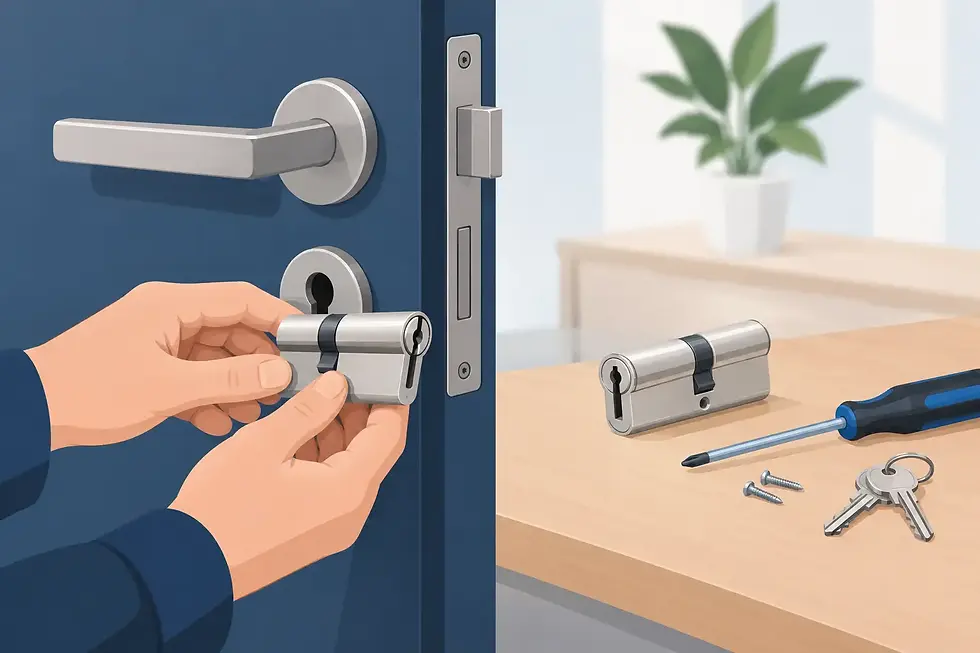
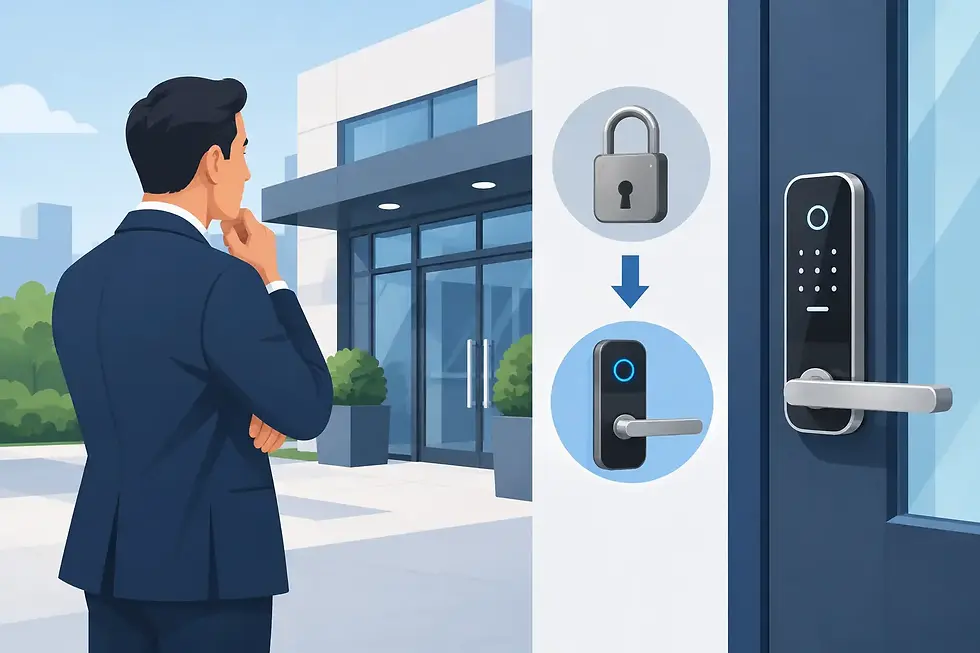
A professional locksmith can help identify where a mechanical master key system makes sense and where electronic access control may be a better fit. For example, high-turnover employee entrances often benefit from programmable credentials, while private offices and interior utility rooms may be well suited to quality key-operated locks.
Plan for Key Control, Not Just Key Convenience
A master key is only as secure as the process used to control it. Once keys are issued without records, copied freely, or left in unsecured locations, the benefits of the system begin to disappear.
Keep a current key log showing the key identifier, the person assigned to it, the date issued, and the date returned. Do not label keys with the business name, unit number, or door location. If a labeled key ring is lost, it can give someone a direct guide to your premises.
Keys should be issued to named individuals rather than shared casually among teams. Shared keys are difficult to trace, especially after shift changes or staff turnover. When a key is returned, inspect it and record the return. If it is missing, assess what that key can open and decide whether rekeying is necessary.
Restricted or patented keyways can add another layer of control. These systems limit unauthorized duplication because replacement keys are supplied through an authorized locksmith rather than copied at a typical hardware counter. They are not necessary for every office, but they are worth considering when keys protect sensitive information, expensive equipment, medication, inventory, or multiple locations.
Protect the highest-level keys
Grand master keys deserve their own procedures. They should be held only by a small number of trusted, authorized people and stored securely when not in use. A grand master key can be valuable during an emergency, but its loss may affect access throughout the facility.
Consider whether the top-level key needs to travel off-site. In some businesses, it is safer to keep it in a secured key cabinet or lock box at the location for emergency use. The best choice depends on who may need access after hours, whether the building has security staff, and how quickly a responsible person can respond.
Build Staff Changes Into the Plan
Employee departures are one of the main reasons businesses need rekeying. If a former employee does not return a key, there is no reliable way to know whether it was copied or who may possess it. A well-managed offboarding process prevents this from becoming an afterthought.
Require all keys, fobs, alarm credentials, parking passes, and access cards to be returned before or on the employee’s final day. Compare returned items to the issue log. If a high-level key is missing, act quickly. Rekeying selected doors may be enough in some cases, while a broader change may be necessary if the missing key opens many areas.
Office moves, tenant changes, renovations, mergers, and leadership transitions are also useful moments to review the system. A business can outgrow its original access plan without noticing. New departments get added, storage spaces change use, and keys accumulate over time. Periodic review keeps the hierarchy aligned with the way the building actually functions.
Do Not Ignore the Condition of the Door Hardware
A well-designed master key system cannot compensate for weak, damaged, or improperly installed hardware. Before finalizing the plan, inspect door closers, hinges, strikes, frames, panic hardware, and lock function. A door that does not latch consistently can defeat even a high-security cylinder.
Exterior doors and high-risk rooms may require commercial-grade deadbolts, lever locks, reinforced strikes, or higher-security cylinders. Fire-rated openings require compatible hardware, and exit doors must continue to meet life-safety requirements. Security upgrades should never interfere with safe emergency egress.
This is where an on-site assessment is valuable. A locksmith can see conditions that are not obvious on a floor plan, such as a warped door, a loose frame, an exposed rear entrance, or a lock that has been repeatedly repaired rather than properly replaced.
When Electronic Access Control Should Be Part of the Conversation
Mechanical keys remain dependable, affordable, and appropriate for many offices. They do not rely on batteries, networks, apps, or staff training beyond basic key control. For smaller operations with stable teams, a properly planned master key system can be the most practical choice.
Electronic access control becomes more attractive when staff changes are frequent, access needs change by time of day, or management needs an audit trail. A credential can be removed quickly when an employee leaves, while a physical key may require rekeying if it is not returned. Some facilities use both systems: electronic access for main entries and employee doors, with mechanical master keys for selected interior openings and emergency backup.
There is no one-size-fits-all answer. The best approach balances security, budget, maintenance requirements, and the daily reality of your business.
Get the System Documented Before Installation
Before any keys are issued, review the final hierarchy, keying schedule, hardware specifications, and duplication policy. Confirm who can authorize additional keys and who will maintain the records. A clear plan prevents a common problem: years later, nobody knows what a particular key opens or whether a copy was approved.
Durham Regional Locksmiths helps businesses throughout Durham Region assess existing door hardware, design practical master key systems, rekey commercial locks, and improve key control. Whether you are opening a new office or correcting years of uncontrolled copies, the work should begin with a careful review of access needs.
A good office master key plan should make daily access easier without making security casual. Start with your doors, assign access by role, keep accurate records, and review the system whenever your people or premises change.