
.png)

Lockout Tagout (LOTO) Guide – Canada-Wide Compliance & Best Practices
- Durham Regional Locksmiths

- Apr 6
- 3 min read
A properly implemented Lockout Tagout (LOTO) program is essential for protecting workers across Canada from hazardous energy during servicing and maintenance. While LOTO requirements are governed provincially, the core principles remain consistent nationwide: isolate energy, apply personal locks, and prevent re-energization.
This guide provides a top-level Canadian overview, followed by key provincial differences, and outlines the best padlock solutions—including the ABUS 72IB/40 and ABUS 74/40—for building a compliant and efficient program.
What is Lockout Tagout?
Lockout Tagout is a formal safety procedure used to:
Shut down equipment
Isolate all energy sources
Apply locks and tags to prevent restart
Hazardous energy includes:
Electrical
Mechanical
Hydraulic
Pneumatic
Thermal
Canadian LOTO Requirements (National Overview)
Unlike the U.S., Canada does not have a single federal OSHA-style standard. Instead:
Each province enforces its own occupational health and safety (OHS) regulations
Requirements are very similar across jurisdictions
All emphasize:
Worker-specific lock control
Written procedures
Training and enforcement
Core Canadian LOTO Principles
Across all provinces, you’ll see:
One lock per worker (personal control is mandatory)
Locks must be uniquely keyed
Energy must be fully isolated and verified
Only the worker who applied a lock may remove it
Recommended Padlock Strategy (Best Practice)
Minimum Requirement
1 lock per authorized worker
Industry Best Practice
10 padlocks per employee
This ensures:
Coverage for multi-point lockouts
Efficiency during maintenance
Reduced downtime
Choosing the Right LOTO Padlock
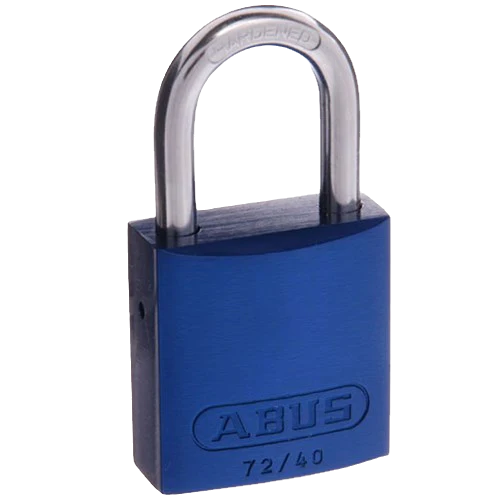
General LOTO Applications
The ABUS 72IB/40 is ideal for most lockout scenarios:
Key Features:
Aluminum body with corrosion resistance
Hardened steel shackle
Compact and lightweight
High-quality cylinder for key control
Best For:
Mechanical equipment
Valves and general machinery
Indoor and outdoor use
Electrical Lockout Applications

For electrical environments, the ABUS 74/40 is the preferred choice.
Key Features:
Fully non-conductive body and shackle
Spark-resistant construction
Lightweight and highly visible
Best For:
Electrical panels
Breaker lockouts
High-risk energized environments
👉 Using non-conductive locks is critical where electrical hazards exist.
Key Control & Lock Allocation (Critical for Compliance)
A compliant Canadian LOTO program requires:
Each worker has exclusive key access
No duplicate keys between employees
Locks are assigned individually, not shared
Optimized Purchasing Approach
Through Lockcetera:
Purchase packs of 10 padlocks per employee
Each pack is:
Keyed alike internally (one key per worker)
Keyed differently from all other packs
Benefits:
Eliminates cross-key risk
Simplifies lock management
Improves job efficiency
Meets compliance expectations nationwide
Provincial LOTO Differences (Canada)
While similar, each province has slight variations in terminology and enforcement.
Ontario (OHSA & Industrial Establishments Regulation)
Requires lockout of all energy sources before work
Strong emphasis on written procedures
Mandatory worker training and employer enforcement
👉 Widely enforced in manufacturing, construction, and municipal sectors
Alberta (OHS Code)
Requires zero energy state verification
Allows alternative methods only if lockout is not possible (rare)
👉 Strong enforcement in oil & gas and industrial sectors
British Columbia (WorkSafeBC)
Detailed requirements for energy isolation and worker protection
Requires formal lockout procedures and documentation
👉 Highly structured compliance expectations
Quebec (CNESST)
Requires cadenassage (lockout) systems
Emphasis on worker-specific locks and strict control
👉 One of the strictest interpretations of LOTO in Canada
Manitoba, Saskatchewan, Atlantic Provinces
Follow similar frameworks:
Worker-controlled locks
Written procedures
Training requirements
👉 Enforcement varies but principles remain consistent
LOTO Best Practices (Canada-Wide)
To ensure your program is compliant and effective:
Assign 10 locks per employee
Use high-quality, safety-rated padlocks
Maintain strict key control systems
Standardize lock types across your facility
Conduct regular LOTO audits and training
Use non-conductive locks for electrical work
Final Thoughts
A strong Lockout Tagout program is a legal requirement and a critical safety system across Canada.
By combining:
Proven procedures
Proper training
High-quality hardware like the ABUS 72IB/40 and ABUS 74/40
And structured purchasing through Lockcetera
…you create a system that is:
Safer
More efficient
Fully compliant across provinces
About Us: Durham Regional Locksmiths has been serving Durham Region for over 40 years, we ship throughout Canada and the United States, as well as provide installation services throughout Durham Region and the GTA, contact us today for a supply and installation estimate or shop online.
Areas We Service:
Oshawa, Whitby, Ajax, Pickering, Clarington, Bowmanville, Port Perry, Courtice, Uxbridge, Toronto, Markham, and Scarborough.
Business Hours:
Monday - Friday | 8:30 AM - 5:30 PM
Phone: 905‑728‑9218 24 hour Emergency Locksmith.
497 Simcoe St S, Oshawa, ON L1H 4J9


