.png)


What Is an Emergency Lockout?

You step out for a second, hear the door click behind you, and realize your keys are still inside. Or your car key stops responding in a dark parking lot after work. That is usually what people mean when they ask, what is an emergency lockout. It is a situation where you cannot access your home, vehicle, business, room, or secured area, and you need help right away because waiting is unsafe, impractical, or could cause bigger problems.
An emergency lockout is not just about inconvenience. The urgency comes from the circumstances. Maybe a child is inside the house, your car is running, your storefront cannot open, or you are stranded late at night. In those moments, the issue shifts from annoying to urgent, and the right response matters.
What is an emergency lockout in simple terms?
In simple terms, an emergency lockout happens when you are locked out and time matters. You cannot enter the property or vehicle you are authorized to access, and the situation calls for prompt service rather than a routine appointment.
That could mean a homeowner locked out after hours, a driver with keys trapped in a vehicle, or a business manager unable to open a commercial door before staff arrive. It can also include broken keys, failed key fobs, jammed ignitions, damaged locks, or electronic access systems that stop working unexpectedly.
The key difference is urgency. If you can safely wait until next week, it is probably not an emergency lockout. If access is needed now for safety, security, operations, or weather exposure, it usually is.
Common situations that count as an emergency lockout
The most familiar example is being locked out of your house. That can happen because the door auto-locks, the key breaks, the lock fails, or the keys are lost entirely. For families, the risk goes up quickly if there are children, pets, medication, or weather concerns involved.
Car lockouts are another major category. Sometimes the keys are visible on the seat. Other times the issue is electronic, such as a dead fob battery, a malfunctioning transponder key, or a damaged ignition that leaves you unable to start or secure the vehicle. A lockout at home in daylight is one thing. A lockout in a parking lot, on the roadside, or before a long commute is different.
Commercial lockouts can be even more disruptive. If an office, retail location, clinic, or industrial site cannot be accessed, business stops. Employees wait, customers are affected, deliveries are delayed, and the site may be left unsecured. In some settings, one failed lock or access credential can interrupt the entire day.
There are also emergency lockouts that are less obvious. A tenant may have a key that suddenly stops working because the cylinder is worn. A property manager may need immediate access after a tenant move-out. A facility operator may face an access control issue that locks out authorized staff. These are still lockouts, even if the cause is mechanical or electronic rather than a forgotten key.
What causes an emergency lockout?
Most emergency lockouts come down to one of a few causes. People lose keys, leave them inside, or deal with doors that lock automatically. Those are the straightforward cases.
Then there are hardware failures. Locks wear out. Keys bend. Cylinders jam. Weather can affect older doors and frames, making them misalign so the key or latch no longer works properly. In vehicles, batteries fail, fobs stop communicating, and ignitions develop faults that prevent normal entry or startup.
Commercial properties add another layer. Master key systems, panic hardware, electronic access systems, and higher-traffic doors all have more moving parts and more potential failure points. When they stop working, the solution often requires more than basic lock picking.
That is why emergency lockout service is not just about opening a door. It is about identifying what failed, restoring access safely, and deciding whether the underlying hardware also needs repair, rekeying, replacement, or reprogramming.
What a locksmith does during an emergency lockout
A professional locksmith starts by confirming that you have authority to access the property or vehicle. That protects both the customer and the property owner. After that, the technician assesses the type of lock, the condition of the hardware, and the least destructive way to regain entry.
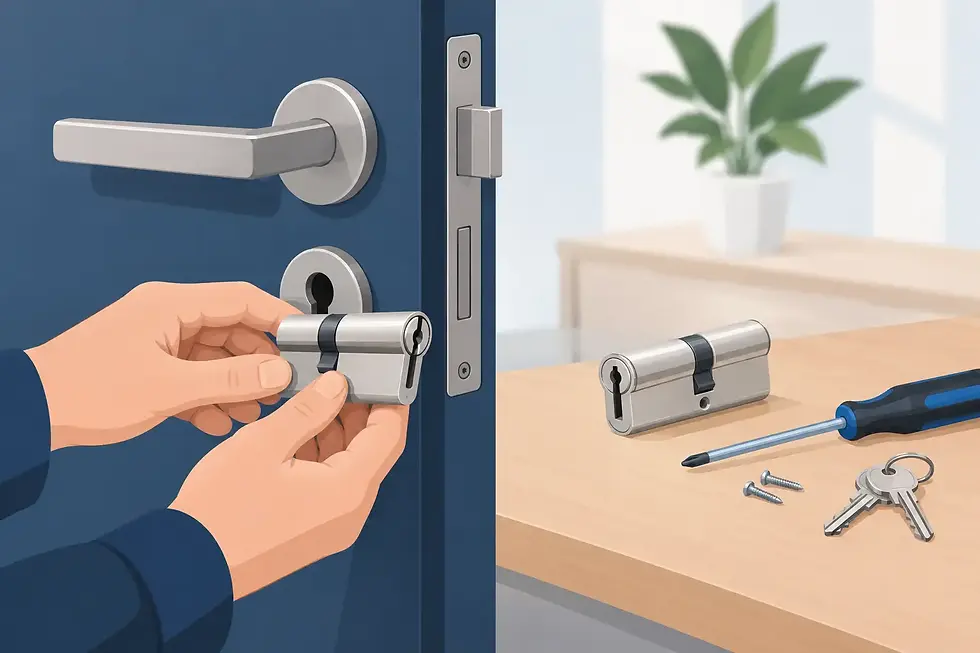
In many cases, the goal is non-destructive entry. That might involve professional lock opening tools, decoding techniques, vehicle entry methods designed to avoid damage, or electronic diagnostics for newer car keys and fobs. If the lock is broken or compromised, the work may shift from opening the door to replacing or rekeying the hardware on the spot.
For automotive lockouts, the job can be more involved than many drivers expect. If the issue is not simply keys locked inside, the locksmith may need to cut a new key, program a transponder, test a remote, or diagnose whether the problem is actually with the ignition or immobilizer system.
For homes and businesses, emergency access may be only the first step. If the original key is lost or stolen, restoring entry without changing the lock may not be enough. In that situation, rekeying or replacing the lock is often the safer move.
When it is truly an emergency and when it can wait
Not every lockout needs a middle-of-the-night call, but many do. If someone is vulnerable, the weather is severe, the building cannot be secured, your vehicle is stranded in an unsafe location, or business operations are shut down, that is an emergency.
If you are locked out of a storage room during business hours and there is another safe way to manage until morning, that may be a scheduled service instead. The same goes for a sticky lock that still works but clearly needs attention. It is not an emergency yet, but leaving it alone can turn it into one.
This is where experience matters. A skilled locksmith can tell the difference between an access problem that needs immediate entry and one that points to a larger hardware issue. That judgment helps avoid temporary fixes that fail again a week later.
Why trying to force entry can make things worse
People often try a window, a credit card trick, or improvised tools before calling for help. That is understandable. In a stressful situation, fast access feels like the only goal.
The problem is that forced entry can turn a lockout into a repair bill. Damaged door frames, bent latches, broken weatherstripping, scratched vehicle paint, torn window seals, and ruined lock cylinders are common results of DIY attempts. On newer cars and commercial doors, the risk is even higher because the hardware is more specialized.
There is also the security issue. If a lock is forced open incorrectly, it may never work properly again, or it may become easier for someone else to bypass later. A lockout is stressful enough without creating a second problem after you get back inside.
What to expect from emergency lockout service
Good emergency lockout service is straightforward. You explain what happened, where you are, and what type of property or vehicle is involved. The locksmith should ask practical questions, such as whether the keys are lost, whether the lock is damaged, and whether there are any urgent safety concerns.
Once on site, the technician should work methodically, not aggressively. The best outcome is fast entry with little or no damage, followed by a clear explanation of any next steps. Sometimes there are none. Other times, the safer recommendation is to rekey the lock, replace failed hardware, duplicate working keys, or program a backup car key before the problem repeats.
For property managers and business owners, emergency lockout response should also account for continuity. Getting one door open is helpful, but so is identifying whether other locks in the system are likely to fail, whether key control has been compromised, and whether access should be updated more broadly.
Preventing the next emergency lockout
Some lockouts are hard to predict, but many are preventable. Spare keys help, but only if they are stored safely and thoughtfully. Worn keys should be replaced before they snap. Sticky locks should be serviced before they fail completely. Vehicle owners benefit from having a backup key or fob, especially when the original is already unreliable.
For businesses, prevention usually means more structure. Clear key control, routine hardware maintenance, and access systems that match the property's actual traffic and security needs make a real difference. A lock that works fine on a low-use office may fail quickly on a busy storefront or industrial entry.
For homeowners and drivers across Durham Region, working with an experienced locksmith before there is a crisis can save time later. A trusted local provider like Durham Regional Locksmiths can help with duplicates, rekeying, hardware upgrades, and automotive key programming before a simple problem becomes an after-hours emergency.
An emergency lockout is really a moment when access, safety, and time all collide. The fastest path back inside is not force. It is calm, skilled help that solves the immediate problem and leaves your security intact.