.png)


When to Change Locks After Breakin at Your Home
- Durham Regional Locksmiths

- 22 hours ago
- 5 min read
A broken door frame, an open window, or a missing set of keys changes the way a property feels immediately. The question of whether to change locks after breakin is not only about replacing hardware. It is about making sure the person who entered cannot come back, while restoring secure access for everyone who belongs there.
The right response depends on how entry was gained, what was damaged, and whether any keys or access devices are missing. In many cases, a professional locksmith can secure the property quickly, then help you decide whether rekeying, new locks, or a wider security upgrade makes the most sense.
Secure the Property Before Replacing Anything
If the break-in has just occurred, contact emergency services first and avoid disturbing the scene until police have completed their work. A damaged lock, door, or window may be evidence. Once authorities have released the property, the priority becomes preventing another entry.
Check every accessible opening, not just the point where the intruder entered. A burglar may have unlocked another door from inside, opened a garage door, taken a spare key, or tested weak side and rear entrances. For a business, include employee entrances, loading doors, storage rooms, and any door connected to a master key system.
Temporary measures can help for a short time, but they should not become the permanent solution. A door that no longer latches correctly, a deadbolt that turns loosely, or a strike plate pulled from the frame needs prompt repair. The lock can be high quality, but it cannot do its job if the door frame is compromised.
Should You Change Locks After a Breakin?
You should replace locks when the hardware is damaged, outdated, easily bypassed, or no longer suited to the level of risk. A forced entry often damages more than what is visible from outside. Internal lock components can bend or crack, and a cylinder may work for a few turns before failing later.
Replacement is usually the better choice when a deadbolt was drilled, pried, kicked, snapped, or otherwise physically attacked. It is also worthwhile if the existing locks are basic builder-grade hardware, use a worn keyway, or do not have a proper deadbolt on an exterior door.
New locks can provide a chance to improve the full opening, not just the cylinder. Depending on the door, this may include a reinforced strike plate, longer mounting screws anchored into the framing, a heavy-duty deadbolt, improved door hardware, or a high-security restricted key system. For commercial properties, the appropriate solution may be a durable commercial-grade lever, protected cylinder, access control credential, or a revised master key plan.
Not every break-in calls for identical hardware. A detached garage, rental unit, medical office, retail storefront, and family home have different traffic patterns and security needs. The goal is to close the weakness that was used, without paying for upgrades that do not solve a real problem.
Rekeying May Be Enough When Keys Are the Concern
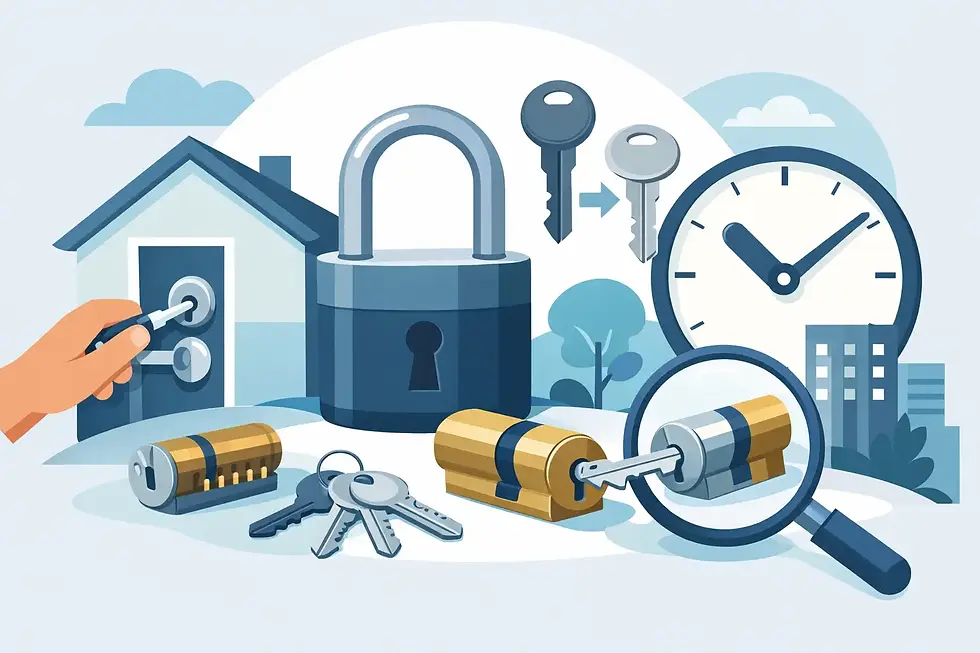
Rekeying changes the internal pin configuration of an existing lock so old keys will no longer operate it. It is often a practical, cost-conscious option when the locks are in good mechanical condition but keys were stolen, lost, borrowed, or may have been copied.
For example, an intruder may have entered through an unlocked window but taken a key ring from the kitchen. The exterior locks may not be damaged at all, yet those keys can no longer be trusted. Rekeying every exterior door, garage entry, and relevant storage area can restore control without replacing every lock body.
A locksmith should first inspect the lock before recommending rekeying. Rekeying does not repair a weak deadbolt, a damaged latch, a warped door, or a loose strike plate. It also may not be the right answer if the lock is an older model with limited key control or a cylinder that has already been manipulated.
If several doors use different keys, a locksmith may be able to rekey compatible locks to work with one new key. That can reduce the number of keys you carry while ensuring prior keys no longer work. The convenience is useful, but it should be balanced against how you want access separated between a home, garage, office, utility room, or tenant area.
Look Beyond the Door That Was Forced Open
A break-in exposes a security gap, and the gap is not always the lock itself. Someone who forced a rear door may have chosen it because it was poorly lit, hidden from the street, or fitted with a weak frame. Someone who entered through a window may have noticed that a nearby door had a key hidden outside.
After the property is secure, review the entire perimeter. Look for loose hinges, old window locks, sliding doors that can be lifted from their tracks, exposed spare keys, and doors that do not close tightly. Make sure exterior lighting works and shrubs do not create a concealed approach to doors or ground-floor windows.
For businesses, examine access after hours as carefully as physical hardware. Former employees, vendors, cleaners, or contractors may still have keys, fobs, alarm codes, or access credentials. Rekeying may need to be paired with deleting old access credentials, changing codes, and documenting who is authorized to enter each area.
Choose Hardware That Matches the Risk
A replacement lock should fit the door and the threat, not simply the hole left by the old one. A solid exterior door generally benefits from a quality deadbolt and reinforced strike area. A storefront or high-traffic office door may need commercial hardware designed for frequent use and code-compliant exit requirements.
High-security cylinders can be a sensible option where key control matters. They are designed to provide greater resistance to unauthorized key duplication and common forms of attack. They are not necessary for every home, but they can be valuable for properties with expensive equipment, sensitive records, frequent staff turnover, or a history of attempted entry.
Electronic locks and access control can also help, particularly for commercial sites and rental properties. Their advantage is not that they eliminate the need for physical security, but that access can be changed without collecting every key. They require proper installation, user management, and a backup plan for power, batteries, and emergency access.
Avoid making a rushed purchase based only on appearance or a quick online rating. The best lock can perform poorly if it is installed incorrectly or mounted to a weak door frame. A professional assessment considers the lock, the door, the frame, the hinges, the strike, and how the property is actually used.
Do Not Forget Cars, Garages, and Mailboxes
Stolen vehicle keys can create a second security concern, especially if the key ring included an address, garage remote, office key, or registration documents. Modern vehicle keys may need replacement and programming so the missing key is removed from the vehicle's authorized memory where possible.
Garage remotes should be reset if one is missing, and the door from the garage into the home should be treated as an exterior entry door. If mail or documents were taken, consider what personal information could be used to identify your address, accounts, or routines. Those details do not always require new locks, but they may affect the urgency of rekeying and other protective steps.
Get the Work Done Promptly, Not Carelessly
After a break-in, it is understandable to want every lock replaced immediately. Fast action is wise when the property cannot be secured, keys are missing, or damage is visible. But a thoughtful inspection can prevent unnecessary work and identify problems that a simple lock swap would miss.
Durham Regional Locksmiths provides emergency locksmith support for homes and businesses across Oshawa, Whitby, Ajax, Pickering, and the broader Durham Region. An experienced technician can assess damaged doors and locks, rekey working hardware, replace compromised cylinders, and recommend practical upgrades based on the property rather than a one-size-fits-all package.
The most reassuring result is not a new key in your hand. It is knowing that every person with access is accounted for, every exterior opening is secure, and the point of entry has been properly corrected before life returns to normal.