.png)


Access Control Systems for Safer Properties

A lost key can be copied. A shared code can spread fast. A door propped open for convenience can quietly undo the security you thought you had. That is why access control systems have become a practical upgrade for businesses, multi-tenant properties, and facilities that need more than a basic lock and key setup.
For many property owners and managers, the real value is not just stopping unauthorized entry. It is knowing who can get in, when they can get in, and how easily that access can be changed when staff, tenants, or vendors come and go. In a busy office, retail space, clinic, warehouse, or apartment building, that level of control matters.
What access control systems actually do
At the simplest level, access control systems replace or support traditional keys with managed credentials. Instead of handing out physical keys to everyone who needs entry, you can assign access through cards, fobs, PIN codes, mobile credentials, or biometric readers, depending on the application.
That changes how security is managed day to day. If an employee leaves, you do not necessarily need to rekey multiple doors. If a vendor only needs access during business hours, you can limit their schedule. If a certain area should only be available to supervisors or maintenance staff, permissions can be set accordingly.
Most systems are built around a few core parts: the credential, the reader, the locking hardware, and the software or controller that decides whether access is granted. Some are straightforward standalone systems for one or two doors. Others are networked across an entire property or multiple sites.
Why more properties are moving beyond keys
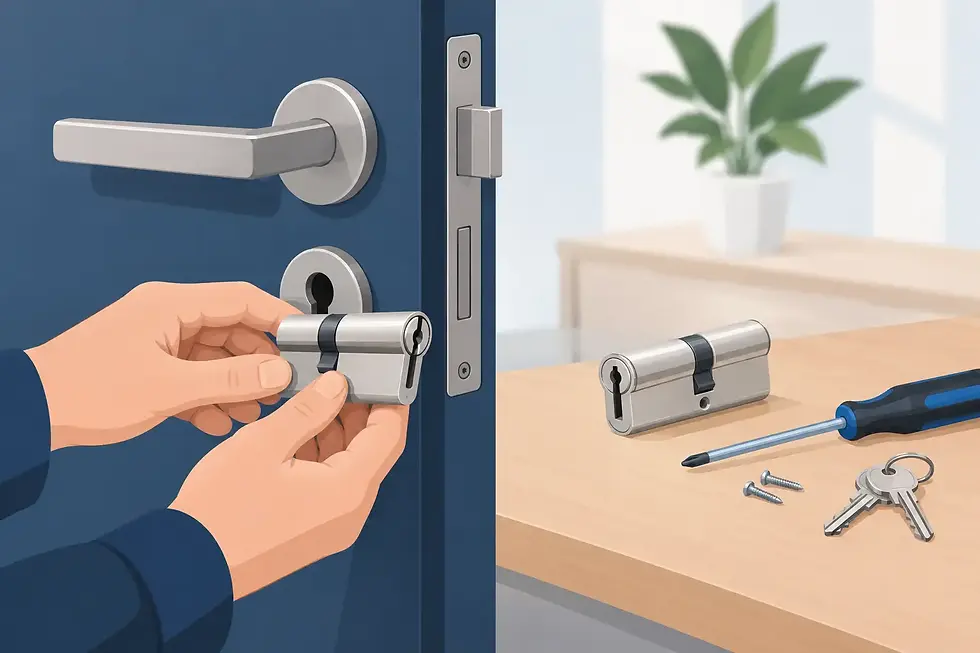
Traditional locks still have an important place. They are reliable, familiar, and often cost-effective. But keys create administrative problems that grow with the size of the property and the number of people who need access.
A single lost key may not seem like much until it opens a front entry, a stock room, a side door, and an office. Then the issue becomes cost, liability, and uncertainty. You may not know whether the key was misplaced, copied, or intentionally kept.
Access control systems address that problem by making access easier to manage. Credentials can often be added or removed quickly. Entry events may be logged. Certain doors can stay locked while still allowing approved users to move through the building without carrying a ring full of keys.
For business owners, that can mean fewer disruptions and better oversight. For property managers, it can reduce turnover headaches. For facilities with sensitive areas, it adds a layer of accountability that standard hardware cannot provide on its own.
Where access control systems make the biggest difference
Not every door needs the same level of security. That is one reason these systems are flexible. A medical office may need controlled access to records and staff-only areas. A retail business may want to protect inventory rooms and cash handling spaces. An apartment building may need managed entry at the main door, utility rooms, and shared amenities.
Industrial and commercial sites often benefit the most because they usually have a mix of public, employee, restricted, and high-value areas. In those environments, one-size-fits-all security rarely works well. Different doors serve different purposes, and access should reflect that.
Even smaller businesses can benefit. A two-door office with frequent employee turnover may gain more from a basic card or keypad system than from repeatedly rekeying locks. The right solution depends less on square footage and more on how the space is used.
Choosing the right type of system
This is where it helps to slow down and look at the actual needs of the property. The best setup is not always the most advanced one. It is the one that fits the traffic, risks, and budget without creating unnecessary complexity.
A keypad system can work well where a small group needs simple, low-cost access. The trade-off is that codes are easy to share, and once too many people know them, control starts to weaken. Card and fob systems offer more accountability because each user can have a separate credential. If one is lost, it can usually be deactivated without affecting everyone else.
Mobile-based access has become more common because many users prefer using their phone instead of carrying another credential. It can be convenient, but it depends on user comfort, device compatibility, and stable system setup. Biometric systems offer strong identity verification, though they are not necessary for every property and can raise cost and privacy considerations.
There is also the question of standalone versus managed systems. A standalone lock may be enough for one door with limited users. A managed system makes more sense when multiple doors, schedules, user groups, or audit trails are involved.
The hardware matters as much as the software
One common mistake is treating access control as only a software decision. The reality is that the door, frame, lock type, traffic level, and life safety requirements all affect what can and should be installed.
A glass storefront door does not have the same hardware needs as a metal rear service door. A high-traffic commercial entrance may require electrified hardware and door closers that can handle daily use. A fire-rated opening brings code considerations that should never be treated as an afterthought.
That is why professional planning matters. A good system is not just about opening a door electronically. It has to work reliably, meet building requirements, and hold up under real-world use. When the hardware is mismatched to the opening, problems show up fast - doors stop latching properly, readers become inconvenient, or users start bypassing the system out of frustration.
What business owners should ask before installing access control systems
Before choosing a system, it helps to answer a few practical questions. Who needs access, and to which doors? Do you need different schedules for staff, cleaners, delivery teams, or tenants? Do you want activity logs? Will the system need to expand later?
It is also worth considering what happens during a power outage, internet disruption, or emergency. Some systems continue functioning locally. Others depend more heavily on network communication. Neither approach is automatically better, but the property should not be caught off guard by how the system behaves when conditions are less than ideal.
Budget matters too, but the cheapest option can become expensive if it fails early, does not scale, or cannot integrate with the door hardware already in place. In many cases, a phased approach works well. Start with the most sensitive or heavily used openings, then expand as needed.
Access control and everyday operations
Good security should support operations, not fight them. If employees struggle to enter the building, if tenants cannot easily use common areas, or if managers need a service call every time a user changes, the system is not doing its job well.
That is why usability matters. The day-to-day experience should be simple for authorized users and straightforward for whoever manages credentials. In some properties, that means a cloud-managed platform. In others, a local, tightly controlled setup is the better fit.
Maintenance should be part of the conversation as well. Batteries, door alignment, closers, strikes, and software updates all affect performance. Electronic security is not install-and-forget hardware. It needs occasional attention to remain dependable.
When it is time to upgrade
There are usually warning signs that a property has outgrown basic locks. Frequent rekeying, shared keys with unclear ownership, recurring lockouts, poor control over former employees or contractors, and too many doors with inconsistent hardware all point to the same issue - access is no longer being managed efficiently.
That does not always mean replacing every lock in the building at once. Sometimes the right move is securing exterior doors first, then adding interior control at offices, server rooms, stock areas, or tenant amenities. A practical upgrade plan often delivers better long-term value than a rushed full replacement.
For properties in Oshawa and throughout Durham Region, that planning process is where an experienced locksmith and security provider can make a real difference. The right recommendation should match the building, the users, and the level of risk, not just the latest product on the market.
Security works best when it is deliberate. Access control systems give property owners and managers a better way to decide who gets in, where they go, and how quickly that access can change when life and business do what they always do - change.