.png)


Durham Region Property Security That Holds Up

A front door that closes but does not latch properly, a former employee who still has a key, or a rear entrance hidden from view can create a much larger problem than it appears. Effective Durham Region property security starts with identifying the ordinary weak points that make unauthorized entry easier - then correcting them with hardware and procedures that fit the property.
For a homeowner, that may mean rekeying after a move or replacing a worn deadbolt. For a business or managed building, it may mean controlling who can enter, when they can enter, and what happens when keys are lost. The right approach is practical, layered, and based on the real use of the building rather than a one-size-fits-all product list.
Start With the Doors That Matter Most
Most break-ins and unauthorized entries do not involve sophisticated techniques. They take advantage of a door, lock, frame, or access routine that has been neglected. Exterior doors deserve the first review, including front and rear entries, garage-to-home doors, patio doors, side doors, loading doors, and any shared service entrance.
A good lock is only as reliable as the door and frame around it. A deadbolt installed in a weak frame, short strike screws, or a damaged jamb can still leave the opening vulnerable. Proper installation should secure the strike plate into the structure of the building, while the door itself should close, latch, and lock without force. If a key needs to be jiggled or the bolt drags against the frame, the hardware needs attention before it fails at the wrong time.
For homes, a quality deadbolt on every primary exterior door is often the sensible foundation. Businesses may need commercial-grade levers, panic hardware, door closers, or automatic door operators depending on occupancy, accessibility requirements, and traffic volume. A storefront door that is opened hundreds of times a day has different demands than a rarely used storage-room door.
Rekeying Is Often the First Smart Upgrade
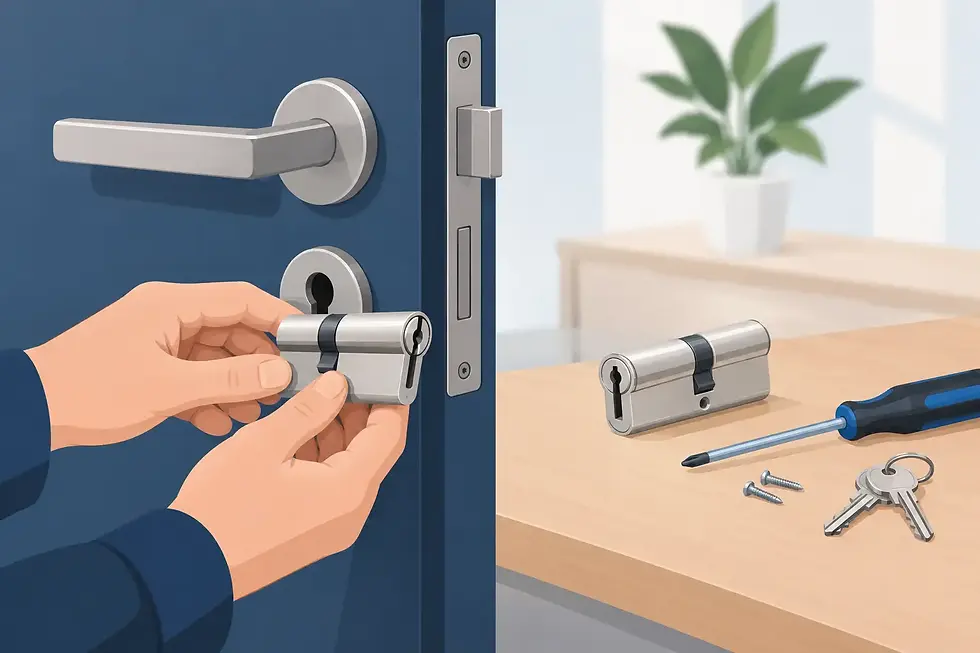
Rekeying changes the internal configuration of an existing lock so old keys no longer work. It is frequently the right choice after purchasing a home, changing tenants, losing keys, ending an employment relationship, or completing renovations with multiple contractors on site.
Replacing every lock is not always necessary. If the existing hardware is in good condition and provides the right level of protection, rekeying can restore control at a lower cost. Replacement makes more sense when locks are worn, incompatible with the door, visibly damaged, or below the security level the property requires.
At Durham Regional Locksmiths, rekeying can also be used to simplify a property by setting compatible locks to operate with one key. That convenience is valuable, but it should be planned carefully. A single-key setup works well for many homes; commercial properties often benefit more from controlled key levels or an electronic system that limits access by role.
Build Durham Region Property Security in Layers
Locks are essential, but property security works best when several basic protections support each other. The goal is not to turn every building into a fortress. It is to make entry more difficult, more noticeable, and less worthwhile while giving authorized people reliable access.
Start with visibility. Shrubs, fencing, storage bins, and parked vehicles should not provide cover around ground-level windows or secondary doors. Exterior lighting should cover pathways, entrances, parking areas, and loading zones without creating glare that makes it harder to see. Motion-activated lighting can be useful at homes and low-traffic commercial locations, while a consistently lit entrance may be better for buildings open after dark.
Next, consider windows and sliding doors. A window lock is helpful, but it should not be the only safeguard on an accessible opening. Sliding doors may need a properly fitted secondary bar or pin, particularly when the original latch has play. Basement, garage, and rear windows should receive the same attention as a front entrance, especially if they cannot be seen from the street.
Finally, protect the items that would cause the greatest disruption if stolen. Important documents, cash, sensitive files, backup drives, medications, and valuable inventory need storage that matches the risk. A fire-rated safe protects against different threats than a burglary-rated safe. The right choice depends on what is being stored, the value involved, whether fire resistance is needed, and how the safe will be installed.
Control Keys Before They Become a Liability
Keys are easy to overlook because they are familiar. Yet uncontrolled keys are one of the most common security gaps in rental properties, offices, clinics, warehouses, and retail businesses. When nobody can say how many copies exist or who has them, the property has already lost a measure of access control.
A simple written key record can make a meaningful difference. Record the key number, the door it operates, the person or department responsible, and the date issued. Require keys to be returned when employment ends or when a vendor no longer needs access. If a master key is missing, treat it as a security event rather than an inconvenience.
Restricted key systems add another layer of control because copies cannot be made as casually as a standard key. High-security options, including Medeco M4 systems, can be appropriate where key duplication, lock picking resistance, and long-term access management are serious concerns. They are not necessary for every residence or small office, but they can be a sound investment for properties with high-value assets or frequent staff turnover.
When a Master Key System Makes Sense
A master key system can give one manager access to multiple doors while allowing employees, tenants, or departments access only to the areas they need. It is useful for apartment buildings, professional offices, schools, retail operations, and industrial facilities.
The trade-off is planning. A poorly designed master key system can create too much access or become difficult to manage after changes in staffing and use. It should be mapped around the building's current needs while leaving room for future doors, departments, or tenants. Every hierarchy should be documented and protected with clear procedures for issuing, recovering, and replacing keys.
Choose Electronic Access Control for Changing Access Needs
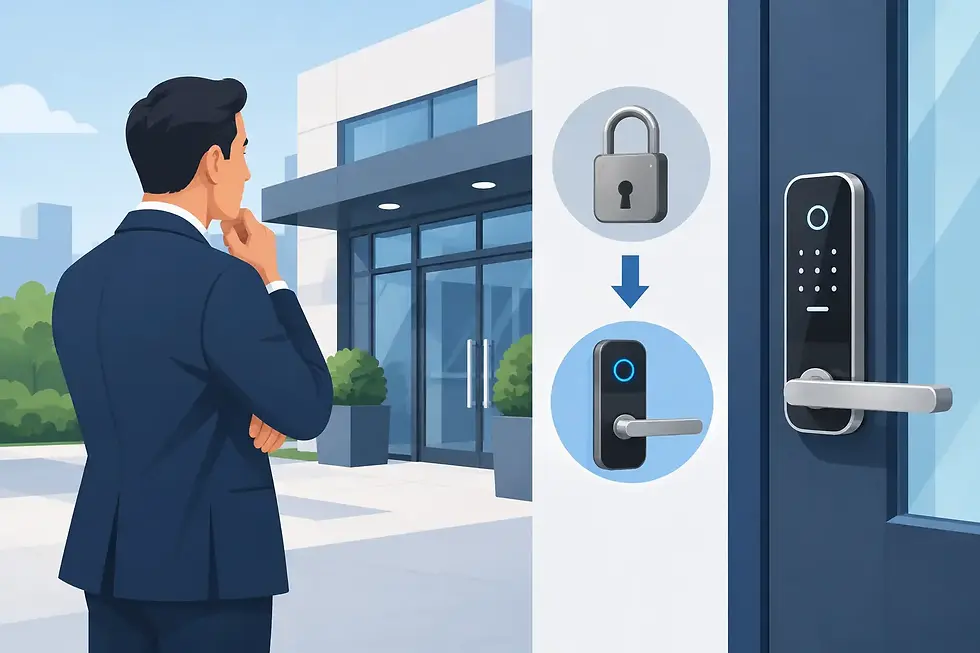
Physical keys remain dependable and cost-effective, but they are not always the best tool for properties with frequent changes in access. Electronic access control allows owners and managers to add or remove credentials without rekeying a door every time someone leaves.
This can be especially useful for offices with rotating staff, clinics handling private areas, buildings with multiple tenants, and facilities that need after-hours access rules. Credentials may be cards, fobs, codes, or mobile-based options, depending on the system. Some systems can also create an audit trail showing when a door was accessed, which can help clarify events after an incident.
Electronic access control is not automatically better than mechanical hardware. It requires appropriate installation, ongoing administration, and a plan for power interruptions or system failures. The doors still need quality locks, secure frames, and reliable closing hardware. For many properties, the strongest arrangement is a combination of well-installed mechanical security and electronic control at the most sensitive entries.
Do Not Wait for an Emergency to Find a Weak Point
Emergency locksmith service is there when a lockout, broken key, damaged lock, or failed ignition happens without warning. But planned security work is generally less disruptive and gives property owners more choices. A walkthrough can identify doors that do not latch correctly, outdated hardware, duplicate-key concerns, unprotected storage, and access patterns that no longer fit the way the property operates.
This is particularly valuable after a move, acquisition, break-in, tenant turnover, staffing change, or renovation. These moments change who has access and how the space is used. They are the right time to review locks and security procedures instead of assuming the previous setup still works.
For properties in Oshawa, Whitby, Ajax, Pickering, and across Durham Region, local conditions matter too. A detached home, a busy retail unit, and an industrial site each face different traffic patterns, exposure, and access demands. The best security plan is one that people can follow every day without bypassing it for convenience.
A door that locks reliably, keys that are accounted for, and access that is limited to the right people will prevent more problems than a hurried fix after something goes wrong. Start with the entry that concerns you most, then build from there.