.png)


Keypad Lock Review: What Actually Matters

A keypad lock can eliminate spare keys under the mat, simplify staff access, and make it easier to change who can enter a property. But a keypad lock review should not start and end with whether the buttons light up or the lock connects to a phone. The right choice depends on the door, the people using it, the level of security needed, and what happens when the battery dies at the worst possible time.
For homes, rental properties, offices, and light commercial spaces, keypad locks can be a practical upgrade. They are not automatically the best answer for every exterior door, however. A quality mechanical deadbolt may still be the better fit for a rarely used side entrance, a high-abuse industrial door, or a door with existing alignment problems.
Keypad Lock Review: Start With the Door
Before comparing features, look at the door itself. Most residential keypad deadbolts are designed for a standard, properly operating door with a common bore hole and a deadbolt backset. If the door sticks, the frame is damaged, or the bolt has to be forced into the strike, an electronic lock will not fix the problem. It may actually expose the issue sooner because the motor must work harder every time it locks.
Check whether the door is solid wood, fiberglass, steel, aluminum, or glass storefront construction. Also consider its exposure to rain, snow, direct sun, and salt. An interior-facing keypad on a sheltered front door has very different demands than a keypad installed on a gate, rear service door, or exterior office entrance.
For commercial doors, preparation matters even more. Cylindrical keypad locks, mortise locks, panic hardware, and electrified access-control hardware are not interchangeable. The correct solution must match the door type, fire rating, occupancy requirements, and traffic level. A residential smart deadbolt is rarely a sensible choice for a busy retail rear entrance.
What a Good Keypad Lock Should Do
A dependable keypad lock performs a few basic jobs consistently: it locks securely, accepts authorized codes quickly, resists ordinary forced entry, and gives the user a workable way to get in during a power issue. Features are useful only when they support those basics.
Mechanical security still comes first
The keypad may be electronic, but the door security is still physical. Look for a deadbolt with a solid bolt, a reinforced strike plate, and long screws that anchor into the framing rather than only the trim. A lock cannot compensate for a weak jamb, loose hinges, or a thin door.
For exterior residential doors, a Grade 1 or Grade 2 deadbolt is generally the right place to begin. Grade 1 is built for higher use and typically offers stronger performance in testing. Grade 2 is often suitable for a normal home entrance. Grade 3 products can be acceptable for low-risk interior applications, but they are usually not the first choice for a primary exterior door.
If you are protecting valuable equipment, sensitive records, or a property with frequent public traffic, consider a higher-security mechanical cylinder or a commercial access-control system rather than relying on a consumer keypad lock alone.
Codes should be easy to manage
The best practical reason to choose a keypad lock is code control. A homeowner can give a contractor a temporary code instead of handing over a house key. A property manager can remove a former tenant's code without collecting keys. A small business can assign separate codes to staff members and change them when roles change.
That benefit disappears if the system is difficult to program. Look for a model that allows multiple user codes, straightforward deletion, and clear instructions for changing the master programming code. Avoid using predictable codes such as an address number, birth year, or 1234. Four-digit codes are common, but longer codes generally offer more combinations and are better suited to shared-use doors.
For a business, individual codes are more useful than one shared code. They create accountability and make offboarding simpler. Once several employees, shifts, or access schedules are involved, a managed access-control system is often more efficient than a standalone keypad lock.
Battery backup is not optional
Most keypad deadbolts run on standard batteries, often AA batteries. Battery life can range from months to more than a year depending on use, weather, motor strength, and wireless features. Cold conditions and a poorly aligned bolt can shorten that lifespan.
Low-battery warnings are helpful, but they require action. Replace batteries promptly with fresh, quality batteries and avoid mixing old and new cells. Keep the mechanical override key somewhere accessible but secure, not on a hook beside the door.
Some keyless models include external emergency power contacts that allow a temporary battery connection from outside. Others have a traditional key cylinder. Either option can be valuable, but every household or manager should understand the backup method before an emergency occurs.
Smart features have trade-offs
Wi-Fi, Bluetooth, app control, auto-locking, and access logs can be convenient. They can also add setup requirements, battery drain, software updates, and more points of failure. A smart keypad lock makes sense when remote code management and status alerts solve a real problem, such as managing a rental, checking whether a staff entrance was secured, or letting a service provider in while you are away.
For a family that simply wants keyless entry at the front door, a non-connected keypad deadbolt may be the more dependable and less complicated choice. Convenience should not force a homeowner into an app, subscription, or wireless feature they will never use.
Common Problems That Affect Real-World Performance
Many keypad lock complaints are installation or door-condition problems rather than defective hardware. A bolt that binds against the strike can cause slow locking, repeated motor errors, and premature battery loss. A keypad mounted crookedly can place stress on the interior mechanism. On some doors, overtightening the mounting screws can interfere with operation.
Weather can also affect performance. Choose a lock rated for exterior use, and do not assume every electronic lock is equally suited to exposed conditions. If a door receives heavy rain or direct afternoon sun, a protected location or a model designed for that exposure is worth the extra attention.
Another common issue is overreliance on auto-lock. Auto-locking can prevent an accidentally unlatched door from remaining unsecured, but it can also create lockout situations. Families with children, people taking out garbage, and businesses with staff moving between doors should choose a delay that fits actual use. A 30-second timer is not always practical.
When a Keypad Lock Is the Right Choice
A keypad lock is often a strong option for a main residential entry, an attached garage-to-home door, a rental unit, a small office, or a controlled staff area. It works best where people benefit from code changes and where the door is in good condition.
It may not be the right primary solution for a high-traffic commercial entrance, a fire-rated door requiring specific listed hardware, a location needing detailed audit trails, or a door exposed to severe wear. In those cases, commercial-grade hardware, a master key system, or professionally designed access control may provide better long-term value.
Installation Is Part of the Security Decision
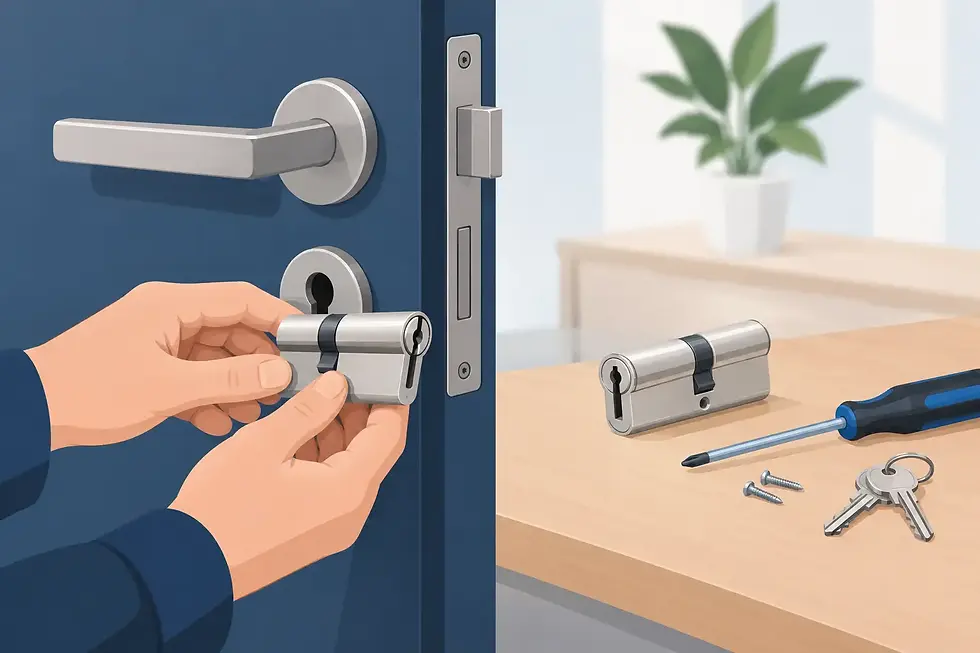
Even a well-reviewed keypad lock can underperform if it is installed on a misaligned door or paired with a weak strike. The lock should throw and retract smoothly with the door open and closed. The bolt should enter the strike without lifting, pulling, or pushing the door.
For homeowners, professional installation is especially helpful when replacing older hardware, modifying a door, or upgrading several entry points. For property managers and businesses, consistent installation and documented code procedures reduce avoidable lockouts and access confusion. Durham Regional Locksmiths regularly helps customers assess whether a standalone keypad lock, high-security deadbolt, or access-control setup fits the door and the security goal.
Choose the lock for the people and door in front of you, not for the longest feature list. A properly fitted keypad lock with sensible code management and a reliable backup plan will usually deliver more day-to-day security than a complicated device that no one knows how to maintain.