.png)


Lock Installation That Fits Your Property

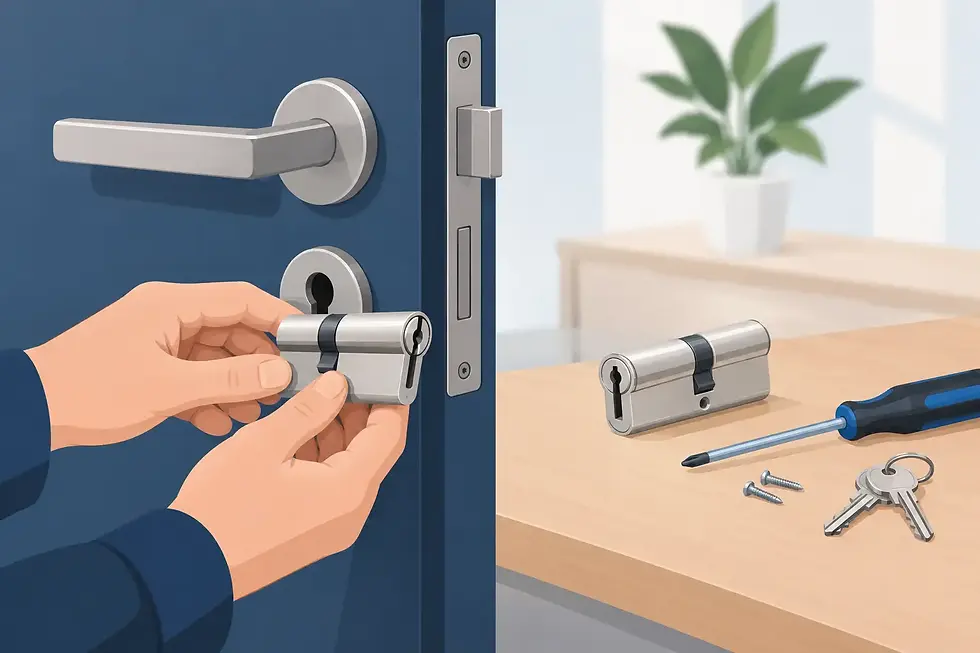
A new lock only improves security when it is the right lock for the door, the frame, and the way people use the property. Proper lock installation is more than replacing visible hardware. It means checking how the door closes, how the strike plate meets the frame, whether the existing holes are sound, and whether the lock provides the level of protection the property actually needs.
For a homeowner, that may mean replacing builder-grade hardware after a move. For a business, it may mean bringing several entry points under a practical keying plan. The goal is the same: dependable access for authorized people and fewer opportunities for forced entry, key misuse, or avoidable lock failure.
Start With the Door, Not the Lock
The strongest deadbolt cannot compensate for a weak door frame, a misaligned latch, or a loose strike plate. Before selecting hardware, a locksmith should inspect the door material, thickness, handing, condition of the hinges, and clearance around the frame. These details affect which lock will fit properly and how well it will perform over time.
A wood front door, steel commercial door, glass storefront door, and aluminum office door all have different requirements. Installing the wrong type of lock can lead to binding, premature wear, damage to the door, or a latch that does not fully engage. In some cases, the best answer is not a higher-security cylinder but a repair to the frame or a reinforced strike plate.
Door alignment matters more than many property owners realize. Seasonal movement, worn hinges, weather exposure, and repeated heavy use can shift a door just enough to make a lock difficult to operate. Forcing a key or turning a stiff thumbturn may seem minor at first, but it can damage internal components and leave the door vulnerable when the latch does not seat correctly.
Choosing Lock Installation for the Right Level of Security
There is no single best lock for every property. The appropriate option depends on the location, the contents behind the door, traffic volume, and how access needs to be managed. A side door leading into a home has different risks than a medical office, warehouse, retail storefront, or equipment room.
For many residential exterior doors, a quality deadbolt paired with a properly installed reinforced strike plate provides a strong foundation. Homeowners may also benefit from rekeying or replacing locks after purchasing a home, completing renovations, losing keys, or ending a tenancy. If several doors use different keys, a locksmith can often configure compatible locks to work with one key, provided the hardware supports it.
Commercial properties often need a more deliberate approach. A business may require commercial-grade levers, panic hardware, restricted keyways, keypad access, or an access control system. The decision should account for fire and life-safety requirements as well as security. For example, an exit door must allow occupants to leave quickly and safely, even when the exterior side requires controlled entry.
High-security cylinders can be a sensible choice where key duplication control and resistance to picking or drilling are priorities. They are not necessary for every door, and they do not eliminate the need for a strong frame and correct installation. The right solution balances risk, budget, convenience, and the cost of disruption if a key is lost or access is compromised.
When a Smart Lock Makes Sense
Smart locks can be useful for households, rental properties, and small businesses that need flexible access without distributing numerous physical keys. They may allow temporary codes for contractors, cleaners, guests, or staff, and some provide activity records through a connected app.
That convenience comes with trade-offs. Batteries must be maintained, users need clear instructions, and the lock must be compatible with the door and existing deadbolt setup. A smart lock also does not solve a warped door, weak strike plate, or poor entry-door lighting. For some properties, a conventional mechanical lock with controlled key access remains the simpler and more reliable choice.
The Details That Make a New Lock Work
Professional installation is measured in small details. The latch should enter the strike smoothly without lifting, pushing, or pulling the door. Mounting screws should be secure and appropriate for the hardware. The deadbolt should extend fully into a reinforced portion of the frame, not merely into thin trim.
A locksmith also checks that the key turns cleanly from outside and that the interior hardware operates without sticking. On commercial doors, this includes confirming that the door closes and latches consistently, particularly where closers, weatherstripping, or frequent traffic can affect alignment.
The installation should preserve the door whenever possible. An experienced technician will select hardware that suits existing door preparation or make precise modifications when a change is needed. Poorly drilled holes, oversized cutouts, and mismatched backsets can create costly repairs and may limit future hardware options.
For exterior doors, protection at the strike side deserves special attention. Longer screws that reach solid framing and a quality reinforced strike can make a meaningful difference against kick-in attempts. The lock is one component of the entry system, not the entire system.
Rekeying, Replacing, or Repairing: Which Is Best?
These services solve different problems. Rekeying changes the internal pins of an existing lock so old keys no longer work. It is often a cost-effective choice when the lock is in good condition but key control has changed. This is common after a move, employee turnover, lost keys, or a change in tenants.
Replacement is the better option when locks are worn, damaged, outdated, incompatible with a new keying plan, or inadequate for the level of security required. It may also be necessary when a lock has been forced, drilled, or repeatedly malfunctioning.
Repair can make sense when the problem is limited to alignment, a loose component, a damaged latch, or a serviceable cylinder. However, repairing low-quality or heavily worn hardware may only postpone replacement. A locksmith can assess the condition on site and explain whether repair is a practical investment.
Planning Access for Homes and Businesses
Every additional key creates a responsibility. Homeowners should know who has copies, including former contractors, neighbors, relatives, and previous occupants. Businesses need an even clearer process for issuing, recovering, and tracking keys, particularly when keys open multiple areas.
A master key system can simplify access for property managers and facility operators by allowing different levels of entry. Staff might access only their work area, supervisors may access several rooms, and management may retain broader access. It is useful only when designed carefully. Poor planning can create too much access, while an overly complicated system can become difficult to manage when staff roles change.
For sites with frequent turnover, multiple shifts, or sensitive areas, electronic access control may be more practical than relying solely on metal keys. Access permissions can be changed without rekeying every affected door. Still, mechanical locks remain essential for many doors and should be maintained as part of the overall security plan.
Signs It Is Time to Address Your Locks
Do not wait for a full lockout or break-in attempt to evaluate door hardware. A key that sticks, a deadbolt that needs force, a handle that sags, or a door that will not latch consistently deserves attention. These are often early warnings of alignment issues or failing components.
Other common triggers include moving into a property, changing tenants, losing a key ring, expanding a business, adding a restricted room, or upgrading an entry after an attempted break-in. In each case, the right response depends on the existing hardware and the access needs of the people using the property.
For homes and businesses across Oshawa and Durham Region, a qualified local locksmith can evaluate the entire opening rather than treating the lock as an isolated part. Durham Regional Locksmiths provides lock installation for routine upgrades, damaged hardware, and more involved security improvements, with the practical experience to match hardware to the property.
A secure door should feel simple to use: the key turns smoothly, the latch closes cleanly, authorized people have the access they need, and the hardware does its job without daily attention. If your locks no longer meet that standard, addressing them before an urgent failure gives you more choices and better control over the result.