Best Storefront Door Locks for Commercial Security

A storefront door has a difficult job. It needs to stand up to daily employee traffic, customer traffic, weather, closing procedures, and attempted forced entry - often while protecting a glass-fronted entrance with limited room for hardware. The best storefront door locks are not necessarily the biggest or most expensive option. They are the locks that match the door construction, the business’s operating hours, life-safety requirements, and the level of risk at the property.
For a retail shop, office, clinic, or warehouse entrance, the wrong lock can create recurring service calls, weak points around the frame, or a door that employees struggle to secure at closing. A professional assessment looks beyond the cylinder and considers the entire opening: door material, stile width, glass, frame condition, hinges, exit requirements, and who needs access.
What Makes a Storefront Door Lock a Good Choice?
Commercial storefronts commonly use narrow-stile aluminum doors with large glass panels. These doors require hardware designed for their slimmer profiles. A standard residential deadbolt may not fit correctly, may interfere with existing hardware, or may leave the door vulnerable at the latch and frame.
The right commercial lock should provide dependable day-to-day operation as well as meaningful resistance to prying, pulling, drilling, and unauthorized key use. It must also work with the door’s intended function. A customer entrance that serves as an emergency exit has different requirements than a rear staff door or a storage-room door.
Key control matters just as much as physical strength. If former employees, contractors, or unknown third parties may have copies of a key, a high-security restricted keyway or a rekey may be more valuable than simply adding another lock. Businesses with several doors may also benefit from a master key system that gives managers access where needed without handing out one key that opens every area.
Best Storefront Door Locks by Door Type and Use
Narrow-Stile Mortise Deadlocks for Aluminum Glass Doors
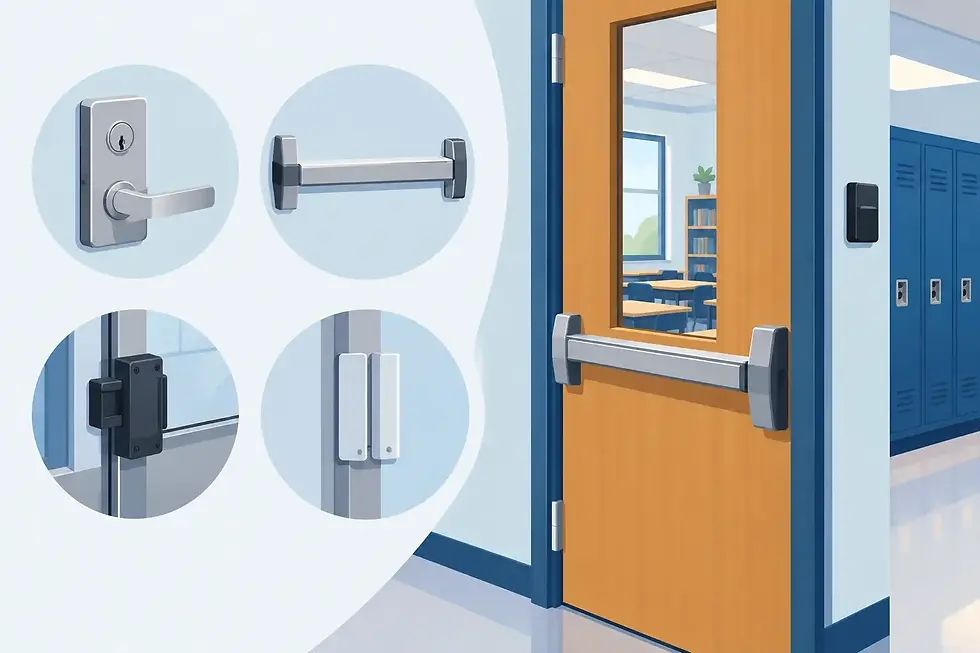
For many retail and office storefronts, a narrow-stile mortise deadlock is the practical starting point. This lock installs inside the aluminum frame of the door and is designed specifically for narrow-profile commercial doors. It can be paired with a quality mortise cylinder on the exterior and a thumbturn, paddle, or compatible interior hardware depending on the application.
A hook-bolt mortise deadlock is often a strong choice for double glass doors or doors that may be targeted for prying. Instead of a simple straight bolt, the hook bolt engages the strike in a way that makes it harder to pull the door apart at the meeting edge. Proper installation is critical. Even a high-quality lock can underperform if the strike is poorly aligned or the frame is weak.
These locks are a good fit for businesses that lock up at night and use a separate panic device or exit hardware during operating hours. They are not a one-size-fits-all answer for every customer-facing entry, especially where a door must remain free for immediate egress.
Commercial Deadbolts for Solid Wood or Hollow Metal Doors
A commercial-grade deadbolt remains a reliable option for solid wood, hollow metal, and steel service doors. Rear entrances, receiving doors, private offices, and storage rooms often benefit from a deadbolt with a reinforced strike and long screws anchored into the framing or structural reinforcement.
The lock itself is only one part of the protection. A deadbolt installed into a thin or damaged frame can be defeated by force at the strike area. For exposed rear doors, a locksmith may recommend reinforcing the jamb, replacing worn weather stripping that prevents proper latching, or addressing a sagging door before installing new hardware.
Single-cylinder deadbolts are common where there is no nearby glass. When glass is close to the interior thumbturn, a double-cylinder design may be considered, but it requires careful review of fire and life-safety rules. Employees must be able to exit safely and quickly without searching for a key during an emergency.
Panic Bars and Exit Devices for Public-Facing Doors
A storefront that is used as an exit by employees or customers may require panic hardware, also called an exit device. A panic bar allows occupants to release the door by pushing the bar from the inside. This is not optional hardware in many occupancy types and building configurations - it is a life-safety component.
Panic hardware can be combined with exterior trims, keyed cylinders, alarmed exit devices, and access-control components. For example, a retail business may need staff to exit freely, prevent unauthorized entry from outside, and receive an alarm notification when a side exit is opened. The right configuration depends on local code, occupancy, and the role of that door.
Do not rely on a chain, slide bolt, or non-rated auxiliary lock to secure a required exit. A door that is secure after hours but unsafe during an emergency creates a much larger problem than a break-in risk.
High-Security Cylinders for Better Key Control
A high-security cylinder is often the right upgrade when key duplication is the main concern. Standard commercial keys can be copied easily in many cases, and businesses rarely have a complete record of who holds them. With restricted key systems, duplicates are controlled through authorized channels, helping managers keep access from spreading over time.
High-security cylinders may also offer additional resistance to picking, drilling, bumping, and other common methods of attack. They work especially well for storefronts with valuable inventory, sensitive records, cash handling, or multiple staff changes throughout the year.
This upgrade does involve a higher initial cost, and replacement keys can cost more than standard keys. For a business with frequent turnover or high-value assets, the improved accountability is often worth it. A commercial locksmith can set up a system that allows an owner or manager to authorize keys while limiting access for employees, vendors, and tenants.
Electrified Hardware and Access Control for Managed Entry
Businesses that need scheduled access, audit trails, credential management, or remote entry may be better served by access control rather than keys alone. Electrified storefront hardware can include electric strikes, electrified panic bars, keypad systems, card readers, fobs, and mobile credentials.
Access control is useful for offices, medical facilities, multi-tenant properties, and sites with changing staff. When an employee leaves, the credential can be removed rather than rekeying the entire building. It can also allow certain users to enter only during approved hours.
The trade-off is complexity. Electrified hardware must be compatible with the door, frame, power supply, fire requirements, and safe exit requirements. Magnetic locks, electric strikes, and electrified trim each have appropriate uses, but they should be selected and installed as part of a complete door-opening plan rather than added piecemeal.
Do Not Overlook the Door Frame and Glass
Storefront security is often defeated at the weakest point, not at the key cylinder. On aluminum glass doors, loose glass stops, worn pivots, misaligned doors, damaged strikes, and weak meeting stiles can all reduce the effectiveness of a lock. A door that rattles in the frame or requires force to close is signaling a problem that should be corrected.
Glass protection may also be appropriate for high-risk locations. Security film, interior grilles, shutters, or changes to display placement can reduce exposure, depending on the building and the business. These measures do not replace proper locks, but they can delay entry and make an attempted break-in more difficult.
For double doors, inspect how the inactive leaf is secured. Surface bolts may be suitable in some situations, while concealed vertical rods or purpose-built exit hardware may be necessary in others. The objective is to secure both leaves without creating a barrier to safe exit.
Choosing the Right Locking Plan for Your Business
Start with how the door is actually used. A main entrance that is unlocked during business hours and secured overnight needs a different approach than a staff-only rear door. Consider who needs access, whether keys have been lost or copied, whether the door is a required exit, and whether the property has experienced attempted break-ins.
A small shop may need a properly installed narrow-stile deadlock, a high-security cylinder, and a reinforced strike. A busy medical office may need panic hardware at public exits plus credential-based access for staff-only areas. A warehouse may need heavy-duty hardware on exterior doors, restricted keys, and a master key system that separates office, loading, and utility access.
There is no benefit in choosing hardware that staff cannot operate correctly or that conflicts with the door’s code requirements. The best option protects the property without slowing down normal business or putting occupants at risk.
Durham Regional Locksmiths helps businesses throughout Durham Region evaluate storefront doors, repair worn commercial hardware, rekey existing locks, and install commercial locking and access-control solutions. A site visit can identify whether the real issue is the lock, the cylinder, the strike, the frame, or the way access is currently managed.
Before replacing a storefront lock, take a close look at the entire door opening. A well-matched lock, secure frame, controlled keys, and safe exit hardware provide far more dependable protection than a single upgrade chosen in isolation.