School Lockdown Hardware Examples That Work

When a classroom door cannot be secured quickly from inside the room, seconds matter. A school lockdown hardware example is not simply a stronger lock or a device added after an incident. It is a code-conscious system that helps staff secure occupied spaces promptly while preserving free exit, daily usability, and access for authorized emergency personnel.
For school administrators, facility managers, and property teams, the best approach starts with the door opening itself: the door, frame, hinges, closer, lock, key control, and how the hardware performs during normal school hours. A security upgrade that frustrates teachers, violates fire and life-safety requirements, or leaves doors propped open is not a dependable solution.
What School Lockdown Hardware Should Do
Lockdown hardware should make it possible to secure a room with minimal steps, under stress, without requiring staff to open the door or step into a hallway. At the same time, occupants must be able to exit freely. That balance is central to a responsible school security plan.
The hardware also has to work every day. Teachers need to enter classrooms, students need to move between periods, custodial teams need access, and administrators may need to respond to maintenance or medical situations. A good system reduces confusion rather than creating a separate, complicated process for emergencies.
Most schools need more than one hardware solution. Classroom doors, exterior entrances, offices, gyms, portable classrooms, staff-only areas, and high-traffic vestibules all present different risks and operating needs. The right combination depends on the building layout, existing door condition, local code requirements, and how access is managed throughout the day.
A Practical School Lockdown Hardware Example
A common school lockdown hardware example is a classroom security lockset installed on a properly rated door and frame. This type of lock allows a staff member inside the classroom to secure the outside lever or trim without opening the door. The door remains available for immediate exit from inside, while entry from the corridor is restricted to authorized keyholders.
That sounds straightforward, but the lockset is only one part of the opening. If the door does not latch consistently, the closer is leaking or misadjusted, the strike plate is loose, or the frame has shifted, the lock may not perform as intended. A qualified locksmith or door hardware professional should inspect the complete opening before recommending a conversion or replacement.
In a well-planned installation, staff receive simple training on the hardware, keys are tightly controlled, and the school tests the process during planned drills. The goal is not to turn every teacher into a security technician. It is to make the correct action familiar and repeatable.
Why improvised barricade devices create problems
Portable door wedges, floor-mounted barricades, straps, and other improvised products can seem like quick fixes. They may also introduce serious concerns. A device that prevents a door from opening can delay evacuation during a fire or medical emergency, interfere with first responders, damage the door or frame, and conflict with local building and fire requirements.
Schools should be cautious about any product that changes egress, requires a complex installation, or cannot be released immediately by occupants. Before purchasing hardware, involve the authority having jurisdiction, building officials, fire officials, and a knowledgeable physical security provider. Security and life safety must work together.
Hardware Options That May Support a Lockdown Plan
A school may use several layers of physical security rather than relying on one lock alone. The best mix depends on the facility and should be selected after an on-site review.
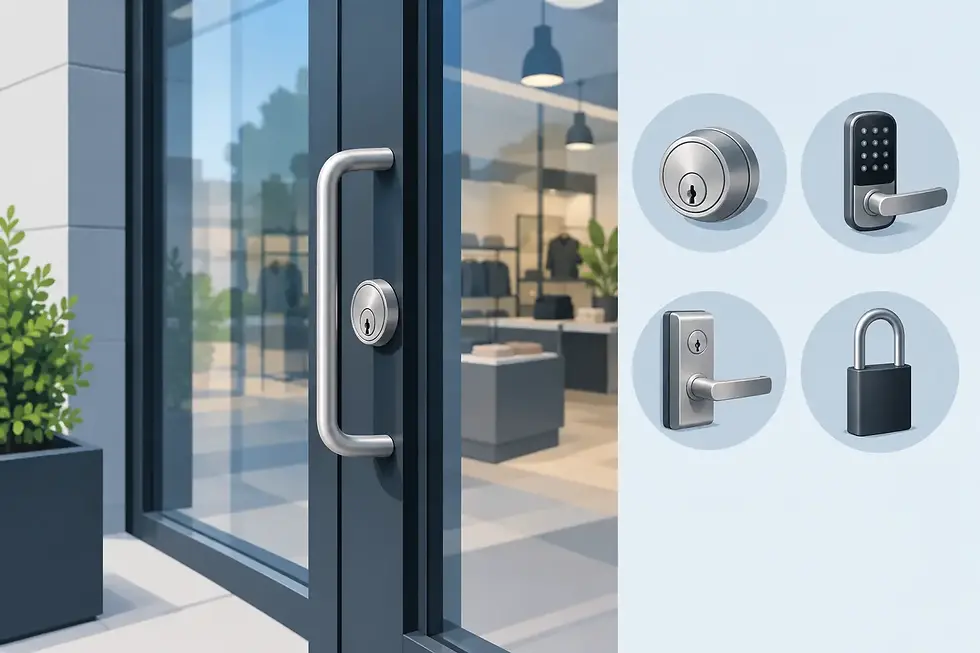
Classroom security locksets
These mechanical locks are often the foundation of a classroom lockdown upgrade. They can be a practical choice for schools that need dependable operation without adding wiring, credentials, batteries, or software management. Mechanical hardware is not maintenance-free, however. Cylinders, keys, door closers, latches, and hinges still require periodic inspection and service.
For some schools, a key-operated function is appropriate. Others may evaluate locksets with clearly indicated status or electronic features. The decision should account for staff training, emergency procedures, budget, and the ability to maintain the system over time.
Electrified locks and access control
Access control can improve management at exterior doors, staff entrances, offices, and selected interior areas. Credentials, fobs, cards, or mobile access can replace widely copied mechanical keys and make it easier to change permissions when staff roles change.
Electronic access control may also support centrally managed schedules and door status monitoring. Still, it requires careful design. Power, wiring pathways, battery backup, network reliability, door release requirements, and code-compliant egress must all be addressed. It is not automatically the right answer for every classroom, especially in older buildings where the door infrastructure may need upgrades first.
Door closers, latches, and continuous hinges
These parts are easy to overlook because they are not the most visible security equipment. Yet they are critical. A classroom lock cannot secure a door that fails to close and latch. A closer should reliably return the door to the frame without slamming, and hinges should keep the door properly aligned.
High-use school doors often wear out faster than expected. Regular adjustment and repair can prevent the common problem of a door that appears closed but is not fully latched. This is one of the most practical improvements a facility team can make.
Key systems and restricted keyways
A lockdown plan can be weakened by uncontrolled keys. A master key system organizes who can access classrooms, offices, utility rooms, and exterior doors, while reducing the number of keys staff must carry. Restricted keyways add another level of control by limiting unauthorized duplication through ordinary retail channels.
Key control does require administration. Schools should document issuance, collect keys when employment ends, and rekey promptly after lost or unreturned keys. For facilities with many doors, this ongoing discipline can matter as much as the hardware selection.
Exterior door security and vestibules
Many schools focus first on classroom doors, but exterior entry management deserves equal attention. Secure perimeter doors, functioning closers, commercial-grade exit devices, visitor entry procedures, and appropriately designed vestibules can reduce unauthorized access before someone reaches an instructional area.
The trade-off is operational. A school needs to welcome families, vendors, and community users without creating bottlenecks or forcing staff to prop doors open. Access control, reception procedures, and dependable door hardware should be planned as one process.
Start With a Door-by-Door Assessment
Before ordering products, inventory the building. Record each opening's location, door and frame condition, current lock function, closer performance, hinge condition, fire rating where applicable, and who requires access. Include portable classrooms, storage spaces, side entrances, and doors that are regularly used after hours.
This assessment often reveals immediate repair needs. A damaged strike, misaligned latch, missing closer arm, or loose lever can compromise both security and daily operation. Repairing these issues may be a sensible first step while the school develops a larger upgrade plan.
A professional review should also identify doors where standard classroom hardware is not suitable. Pairs of doors, glass doors, fire-rated openings, doors with panic hardware, and doors serving assembly areas can have specialized requirements. Installing the same product everywhere may save time at the start but create compliance and maintenance problems later.
Make Training Part of the Hardware Decision
Hardware only works when people understand it. Staff should know how to secure their door, how to exit safely, how to report a malfunction, and where to get help if a key is missing or a lock is damaged. Training should be short, clear, and repeated when hardware or procedures change.
Facility teams should also set an inspection schedule. Test classroom doors for proper closing and latching, check that keys operate smoothly, confirm exit hardware functions correctly, and address reported defects quickly. A lock that works during installation but receives no maintenance is not a long-term security plan.
For schools in Oshawa, Whitby, Ajax, Pickering, and across Durham Region, Durham Regional Locksmiths can assess commercial door hardware, classroom locking needs, master key control, and access control options. The right recommendation begins with the building, the people who use it, and the life-safety requirements that protect everyone inside.
The most useful upgrade is rarely the flashiest one. It is the hardware staff can operate correctly, maintenance teams can support, and occupants can trust when a normal school day suddenly demands a fast, controlled response.