Workplace Security Checklist for Safer Facilities

A door left propped open for a delivery, an employee key that was never returned, or a rear entrance that does not latch properly can create a larger problem than most businesses expect. A practical workplace security checklist helps facility managers and business owners find these gaps before they lead to theft, unauthorized entry, liability concerns, or an after-hours emergency.
Security should fit the way your facility actually operates. A small retail store, medical office, warehouse, and multi-tenant commercial building have different risks, staff traffic, and access needs. The goal is not to add unnecessary layers. It is to control who can enter, where they can go, and how quickly access can be changed when circumstances change.
Start With Doors, Locks, and Building Perimeter
Your perimeter is the first place to inspect because a sophisticated access system cannot compensate for a weak door, damaged frame, or outdated lock. Walk the outside of the building during business hours and again after dark. Look at entrances, employee doors, loading doors, rooftop access points, gates, windows near ground level, and any door that is usually ignored because it is not customer-facing.
Every exterior door should close and latch fully without being forced, dragged, or slammed. Check for loose hinges, damaged weather stripping that prevents proper closure, cracked frames, exposed screws, and gaps that could allow a tool to reach the latch. A door closer that is too slow may invite tailgating; one that closes too hard can create an accessibility issue. Adjustment matters.
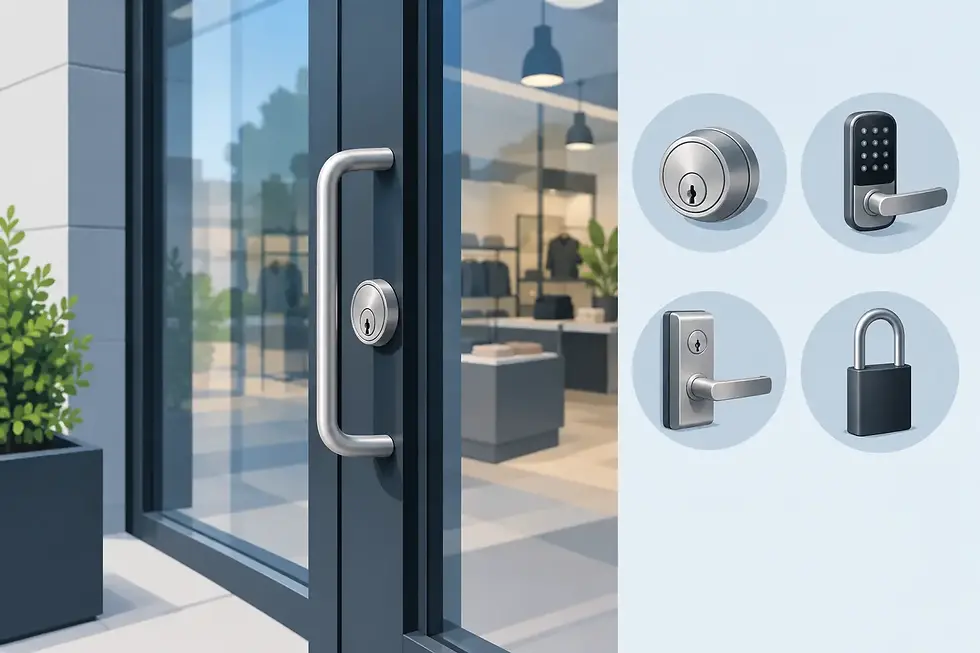
Commercial-grade deadbolts, restricted keyways, and high-security cylinders may be appropriate for offices, retail locations, and facilities with valuable inventory or sensitive records. The right option depends on the door construction and the risk involved. A high-security lock is useful, but only when the door, frame, strike plate, and installation are strong enough to support it.
Check Emergency Exits Without Compromising Safety
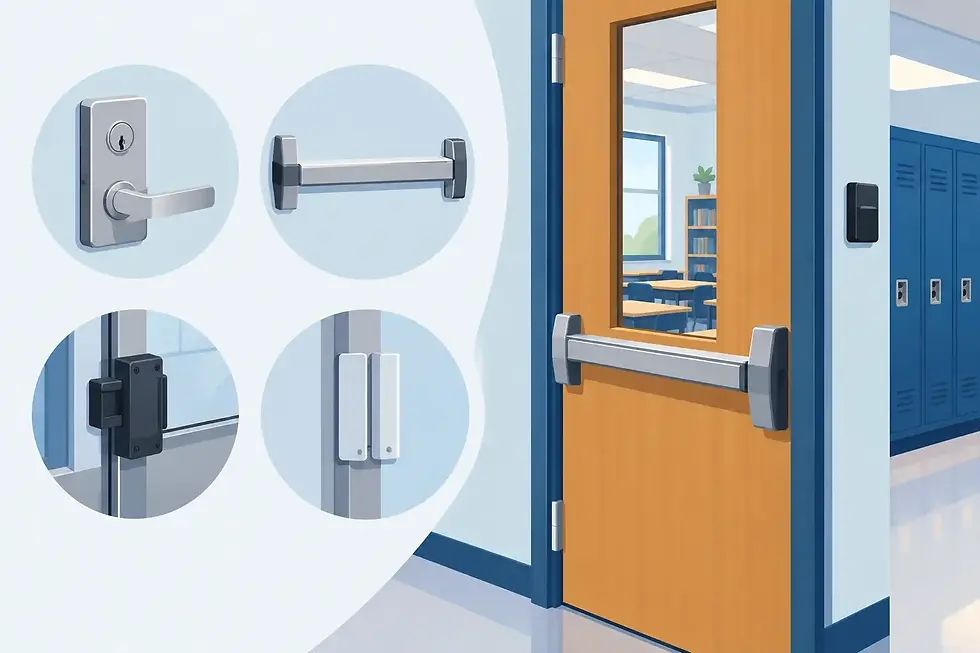
Emergency exit doors must allow people to leave quickly when needed, but they should not become an easy way to enter after hours. Confirm panic hardware operates smoothly, alarmed exits are functioning where installed, and doors are not blocked by inventory, carts, furniture, or equipment.
Never solve a security concern by chaining, locking, or obstructing an emergency exit. If a door is being misused, the answer may be an exit alarm, access control at an adjacent entrance, better employee procedures, or a review of traffic flow. Fire and life-safety requirements always need to be considered alongside security.
Review Who Has Access and Why
Many workplace security issues begin with access that was granted years ago and never reviewed. Keys are copied, former employees retain credentials, contractors come and go, and supervisors may not know exactly who can open a particular area. A current access list is one of the most valuable items on this checklist.
Review physical keys, key fobs, cards, codes, mobile credentials, and remote controls. For each one, identify the person or company responsible, the doors or spaces they can access, and whether that access is still necessary. Do not rely on memory or an informal handoff between managers.
A useful access review should include these four areas:
Current employees, including temporary and part-time staff
Former employees, terminated workers, and staff on extended leave
Vendors, cleaners, maintenance teams, and delivery partners
Shared keys, spare keys, master keys, and keys held off-site
If a key cannot be accounted for, consider rekeying the affected locks rather than hoping it was lost harmlessly. Rekeying changes the lock’s internal configuration so an old key no longer works. It is often a practical response after employee turnover, tenant changes, or a missing master key.
Establish Clear Key Control
A labeled hook board in an open office is not key control. Master keys and keys to cash areas, server rooms, medication storage, tool cribs, or restricted records should be stored in a secured cabinet with a documented sign-out process.
For larger facilities, a master key system can reduce the number of keys staff carry while preserving boundaries between departments and restricted spaces. It requires planning. If too many people hold a top-level master key, the convenience can undermine the security benefit. Assign access according to job duties, not job titles alone.
Inspect Access Control and Visitor Procedures
Electronic access control gives managers more flexibility than traditional keys. Credentials can be added, changed, or removed without replacing a lock cylinder, and many systems create an activity record that can help investigate a problem. It is especially useful for businesses with frequent staff changes, multiple shifts, restricted departments, or several locations.
Still, access control is not a set-it-and-forget-it system. Test card readers, electric strikes, maglocks, request-to-exit devices, intercoms, door position switches, and backup power. Confirm doors unlock and lock as intended during power interruptions and that authorized staff know the correct procedure if the system goes offline.
Visitor management should match the nature of the facility. A public-facing retail business may need clear sightlines and staff awareness, while a medical office or industrial site may need visitors to check in, wear identification, and be escorted beyond reception. Deliveries should have a defined drop-off point so drivers are not moving freely through employee-only areas.
Tailgating deserves direct attention. People often hold doors open to be polite, especially during busy periods. Staff need a simple, professional way to handle it: ask unfamiliar people to use the main entrance or check in with reception. This is easier to enforce when employees understand that the policy protects them, not just company property.
Protect High-Value Areas and Assets
Not every room needs the same level of protection. Focus extra attention on the spaces where loss, interruption, or unauthorized access would cause the most harm. This may include cash offices, stockrooms, IT rooms, records storage, tool areas, controlled inventory, or rooms containing personal information.
Start by identifying what is inside, who legitimately needs access, and what happens if the space is entered after hours. A stockroom may need a stronger lever lock and better key control. A server room may require credentialed access, an automatic door closer, and a record of entry. A warehouse may need secure cages, protected loading doors, and procedures for shift changes.
Safes and lock boxes can protect cash, keys, documents, and small high-value items, but they must be selected for the threat. A lightweight lock box may provide organization, not burglary resistance. Businesses storing cash or sensitive material may need a properly rated fire or burglary safe that is installed in an appropriate location. The safe’s access code, keys, and combination recovery procedures should be controlled just as carefully as the items inside.
Make Lighting, Cameras, and Alarms Work Together
Physical security works best when its parts support each other. Exterior lighting helps employees and visitors see clearly, makes suspicious activity more visible, and improves the usefulness of camera footage. Inspect lighting near employee entrances, parking areas, dumpsters, loading zones, side doors, and pathways. Replace failed fixtures promptly and trim landscaping that creates hiding places or blocks sightlines.
Cameras can help deter misconduct and provide useful evidence, but poor placement limits their value. Verify that cameras cover entrances, cash handling areas, loading bays, and other priority points without being blocked by signs, shelving, or seasonal changes. Test image quality in low light and confirm recordings are retained long enough to be useful if an issue is reported days later.
Your alarm system should have current contact information, tested sensors, and clear opening and closing procedures. False alarms should be investigated, not dismissed. They can point to a failing sensor, a poorly fitting door, staff training gaps, or an attempt to bypass normal procedures.
Build Security Into Daily Operations
The strongest locks can be defeated by inconsistent routines. Opening and closing procedures should be written clearly and assigned to specific roles. At closing, staff should check exterior doors, secure keys, clear unauthorized visitors, set alarms, and report damaged hardware. At opening, they should look for signs of forced entry or unusual conditions before entering alone.
Train employees to report concerns early: a door that does not latch, a missing key, an unfamiliar person in a restricted area, a malfunctioning reader, or an unsecured window. Small reports are not inconveniences. They are often the first warning that a security process needs attention.
It also helps to plan for turnover before it happens. When an employee leaves, deactivate credentials, recover keys and devices, change shared codes if necessary, and review whether that person had access to areas others may have overlooked. Prompt offboarding is far less disruptive than reacting after an incident.
When to Bring in a Security Professional
A checklist can identify obvious weaknesses, but some decisions need an experienced assessment. Consider professional help when you are moving into a new space, changing tenants, expanding staff, experiencing repeated theft, replacing aging door hardware, or trying to manage access across multiple doors and departments.
A commercial locksmith can inspect the full opening, not just the lock, and recommend solutions that fit your building, budget, daily traffic, and safety obligations. For businesses in Oshawa, Whitby, Ajax, Pickering, and throughout Durham Region, Durham Regional Locksmiths can help address urgent lock issues as well as planned upgrades such as rekeying, master key systems, high-security locks, safes, and access control.
Set a date to repeat this review at least once a year, and again after a break-in, major staffing change, renovation, or tenant transition. A workplace stays secure when its access rules and hardware keep pace with the people using it.